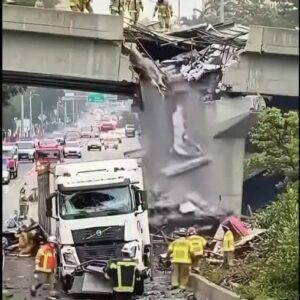
A tragic crash on Rodovia do Sol has left a Brazilian community reeling — not only from the loss itself, but from the haunting questions surrounding it. What began as an ordinary roadside stop ended in devastation when a Chevrolet S10 pickup veered off course and slammed into a parked Chevrolet Cruze, where a young couple and their relatives were changing a tire. Among them were Ingrid and her brother, helping in the stillness of the night, unaware that danger was racing toward them.
Witnesses say the pickup’s movements were erratic — not the slow drift of a drunk driver, but a desperate, panicked swerve, as if the man behind the wheel was fleeing something unseen. The collision was catastrophic. Emergency teams arrived within minutes, rushing the wounded to nearby hospitals. Some survived. Others did not. What remained was a silence heavy with shock and grief — the kind that stays long after the flashing lights are gone.
When police reached the scene, the driver was nowhere to be found. Witnesses reported seeing him run from the wreckage, abandoning the injured and leaving behind a shattered vehicle. Authorities suspect alcohol may have played a role, but his sudden disappearance has fueled speculation about deeper turmoil — fear, guilt, or an unspoken struggle that erupted on the open road. Across Brazil’s highways, the crash has reignited debate over reckless driving and the failure to hold offenders accountable.
For Ingrid’s family, this tragedy is more than a headline — it’s a lifelong wound. Neighbors and strangers alike have rallied around them, united in mourning and anger. As investigators continue their search for the missing driver, the community clings to a single hope: that justice will come, and that this senseless loss will finally compel change. On roads where so many lives intersect, accountability is more than law — it is compassion in action.