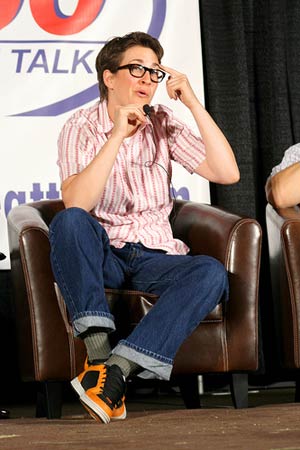
The Stage Is Set: MSNBC’s Primetime Shake-Up
In the summer of 2008, MSNBC was at a crossroads. The network, still finding its footing against giants like Fox News and CNN, needed a fresh face to replace Verdict with Dan Abrams in the 9:00 p.m. slot. The stakes were high: primetime is the battleground where networks fight for viewers, advertisers, and cultural clout. MSNBC executives, led by then-president Phil Griffin, were on the hunt for someone who could embody the network’s evolving identity as a progressive powerhouse. They narrowed it down to three candidates: Rachel Maddow, a rising star with a sharp wit and radio background; David Shuster, a seasoned reporter with on-air charisma; and Dan Abrams, the incumbent host looking to hold onto his slot. Each brought something unique to the table, but only one would emerge victorious.
The Contenders: A Three-Way Showdown
Let’s meet the players in this high-stakes drama. First up, Dan Abrams, the host of Verdict with Dan Abrams. A legal analyst with a polished delivery, Abrams had been a reliable presence on MSNBC, covering legal stories with a no-nonsense style. His show, however, struggled to pull in the ratings needed to compete with heavyweights like Fox’s Hannity & Colmes or CNN’s Larry King Live. Some insiders whispered that Abrams’ straightforward approach lacked the spark needed for primetime’s emotional intensity. Could he reinvent himself to keep his spot?
Next, David Shuster, a hard-hitting reporter known for his tenacious coverage of political scandals. Shuster had been a frequent substitute host on Countdown with Keith Olbermann and other MSNBC programs, earning a loyal following. His journalistic chops were undeniable, but some wondered if he had the star power to anchor a nightly show. Shuster’s style leaned more aggressive, which could either electrify viewers or alienate them in a slot craving accessibility.
And then there was Rachel Maddow, the wildcard. A former Air America radio host, Maddow was already a familiar face on MSNBC as a political analyst and guest host for Countdown. Her blend of intellectual rigor, progressive passion, and disarming humor made her a standout. But she was untested as a full-time TV host, and her openly gay identity raised questions among some executives about mainstream appeal in 2008’s still-conservative media landscape. Could she break through?
The Secret Sauce: Maddow’s Winning Formula
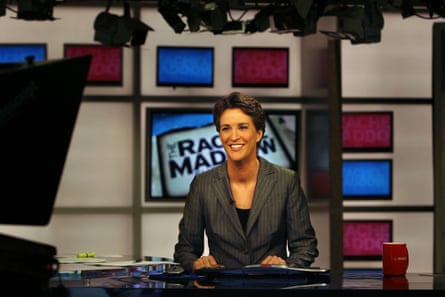
So, how did Rachel Maddow, the underdog, clinch the primetime prize? It wasn’t just luck—it was a masterclass in preparation, authenticity, and strategic alliances. Here’s the inside scoop:
1. The Olbermann Connection
Rachel’s rise was no accident, and much of the credit goes to her mentor, Keith Olbermann. The host of Countdown with Keith Olbermann was MSNBC’s biggest star in 2008, pulling in nearly 2 million viewers a night with his fiery liberal commentary. Olbermann saw something special in Maddow, having invited her as a guest host on his show multiple times. Her appearances were electric, blending policy wonkery with a relatable, almost nerdy charm. When Olbermann pushed for Maddow to get her own show, his clout carried weight. “Keith was her biggest cheerleader,” an MSNBC insider revealed. “He told Phil Griffin she was the future of the network.” Olbermann’s endorsement gave Maddow a crucial edge, positioning her as the heir apparent to his liberal legacy.
2. A Fresh Voice in a Stale Landscape
While Abrams and Shuster were seasoned journalists, Maddow brought something new: a perspective that was both progressive and personal. As the first openly gay or lesbian host of a primetime news show in the U.S., she represented a bold step for MSNBC. Her radio background on The Rachel Maddow Show at Air America had honed her ability to break down complex issues with clarity and wit. Viewers loved her knack for “connecting the dots,” as she’d later describe her mission. Unlike Abrams’ legal focus or Shuster’s hard-news edge, Maddow’s storytelling felt like a conversation with a brilliant friend. Her debut on September 8, 2008, drew 1.8 million viewers, outpacing Larry King Live and signaling her potential.
3. Ratings Gold: The Numbers Don’t Lie
MSNBC executives were stunned by Maddow’s early performance. Within a month, The Rachel Maddow Show doubled the 9:00 p.m. audience, topping Olbermann’s Countdown on several nights. By October 2008, her show was averaging just under 2 million viewers, forming a “liberal two-hour block” with Olbermann that became must-watch TV for progressive audiences. Critics raved, with the Los Angeles Times praising her for finding “the right formula on MSNBC” and The Guardian calling her the “star of America’s cable news.” Abrams and Shuster couldn’t match her immediate impact.
4. Authenticity Over Polish
Maddow’s competitors were polished, but she was real. Her deep, modulated voice and good-humored delivery stood out in a sea of “shrill emotionalism,” as The New York Times put it. Unlike Abrams, whose legal analysis could feel dry, or Shuster, whose intensity sometimes bordered on abrasive, Maddow’s warmth drew viewers in. She wasn’t afraid to geek out over policy details or poke fun at herself, which resonated with younger viewers (her show led in the 25–54 demographic). Her authenticity—coupled with her Oxford-educated brain—made her a unique draw.
5. A Strategic Risk That Paid Off
MSNBC’s decision to bet on Maddow was a gamble. She lacked the TV experience of her competitors, and her progressive, openly gay persona was a departure from the network’s male-dominated lineup. But Phil Griffin saw her as a way to differentiate MSNBC from CNN’s centrist approach and Fox’s conservative juggernaut. “Rachel was a risk worth taking,” a former executive later admitted. “She wasn’t just another anchor; she was a movement.” Her debut marked a turning point, cementing MSNBC’s shift toward a proudly liberal identity with the tagline “Lean Forward.”
The Fallout: What Happened to the Others?
Dan Abrams’ Verdict was canceled to make way for Maddow, and he transitioned to roles at ABC News, where he’s since thrived as a legal analyst. David Shuster continued as a reporter and substitute host at MSNBC until 2010, when he moved to other networks. Neither could replicate Maddow’s magic in 2008, but both left their mark on journalism. Meanwhile, Maddow’s star continued to rise, earning her awards like the Gracie Award in 2009 and a spot on Out magazine’s Power 50 List.
The Legacy: Winning Hearts and Minds
Rachel Maddow didn’t just win a timeslot—she won over a generation. Her ability to dissect complex issues with clarity and passion made her a trusted voice during turbulent times, from the 2008 financial crisis to the Obama era. Her show became a beacon for progressives, offering a counterpoint to Fox News’ dominance. Off-screen, her mentorship from Olbermann and her unlikely friendship with Fox’s Roger Ailes (who advised her on camera angles!) showed her knack for building bridges. By staying true to herself, Maddow didn’t just beat the competition—she redefined what a primetime anchor could be.
The Verdict: A Star Is Born
In the end, Rachel Maddow’s victory was no fluke. It was the result of talent, timing, and a network ready to take a chance on a new kind of anchor. She outshone Abrams and Shuster not by playing their game, but by rewriting the rules. Today, as The Rachel Maddow Show remains a ratings powerhouse, her 2008 triumph stands as a testament to the power of authenticity in a world of spin. So, here’s to Rachel—the brainy, charming, trailblazing host who won MSNBC’s primetime and our hearts!