John Foster’s Opry Debut Stuns Nashville — and Earns a Remark from George Strait That Set the Country World on Fire
There are nights in country music when the stars align—when a song becomes more than melody, when a stage becomes sacred ground, and when a voice, raw and unvarnished, cuts through decades of noise to remind us what country was always meant to be.
June 7, 2025, was one of those nights.
John Foster, a name still fresh to some but whispered like a secret among die-hard country loyalists, made his Grand Ole Opry debut. But long before he strummed the first chord, it was a quiet moment backstage that foreshadowed something unforgettable.
George Strait, the King of Country and an Opry legend in his own right, stood just offstage. Watching Foster prepare with the quiet intensity of someone both nervous and resolute, Strait shook his head, smiled knowingly, and murmured to a nearby staffer:
“I want to adopt that kid.”
He said it with a laugh, but there was a weight behind the words that every seasoned ear recognized. It was pride. It was legacy. And it was the kind of rare acknowledgment that can’t be bought or staged—it must be earned, soul by soul, song by song.
That one remark, overheard and later confirmed, would explode across social media within hours, capturing headlines and fueling a frenzy of fan speculation. But nothing—not even Strait’s subtle blessing—could outshine what came next.
The Song That Shouldn’t Work — But Did
Murder on Music Row is not an easy song to sing on a stage as iconic as the Opry. It is neither safe nor crowd-pleasing in the traditional sense. It’s not about love, or summer, or tailgates—it’s a battle cry disguised as a ballad, a protest anthem aimed at the very industry it inhabits.
Written by Larry Cordle and Larry Shell and popularized by George Strait and Alan Jackson in 2000, the song decries the gradual death of traditional country music at the hands of commercialism and pop influence. “The steel guitar no longer cries and you can’t hear fiddles play,” the lyrics warn—a line that still feels like a gut punch to purists.
For a young artist to choose this song as his debut? Bold. Risky. Maybe even reckless.
But for John Foster, it wasn’t a stunt—it was a statement.
A Voice from Another Time
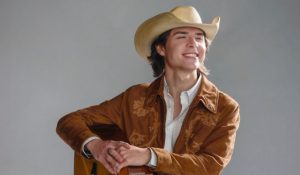
When the lights dimmed and Foster stepped onto the stage, the audience leaned in—not out of excitement, but curiosity. Who was this newcomer, dressed in a light jacket and worn-in cowboy boots, choosing a song this sacred on his very first night?
Then came the first chords.
No band. No backup singers. Just a clean, warm-toned guitar and a voice that didn’t sound like it came from 2025. It sounded older. Weathered. Real.
Foster didn’t imitate Strait or Jackson—he evoked them. His delivery was plaintive and honest, with just enough gravel in the low notes to suggest experience far beyond his years. He sang like someone who’d grown up on vinyl, not streaming. Someone who knew what a long night on a back porch with a broken heart felt like.
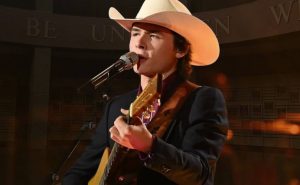
The crowd went silent. Not the silence of boredom or disinterest—but the reverent, breathless quiet that happens when something holy is unfolding in real time. Foster’s voice filled the room, and with it, a sense of nostalgia that wasn’t forced or ironic. This wasn’t a retro performance. This was preservation.
A Moment That Shifted the Room
By the final verse—“They said no one would buy them old drinking and cheating songs…”—some in the audience were wiping away tears. Others just stared, stunned. It was more than a performance; it was a reawakening.
Somewhere in the wings, George Strait watched quietly. The man who once delivered that very song with Alan Jackson to an era desperate for roots now bore witness to a new artist doing the same—except this time, the stakes felt higher.
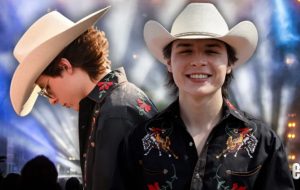
Because in a world increasingly saturated with polished pop-country crossovers, here was John Foster: unfiltered, unbothered, and utterly unshakeable in his devotion to the real thing.
When the final chord rang out, the Opry crowd did something it rarely does for a debut: they stood.
Legacy in Motion
Country music has always been about lineage. From the Carter Family to Cash, from Merle to George, from George to Alan—it’s a living chain. And chains are only as strong as their next link.
John Foster didn’t just sing a song that night. He stepped into that chain.
The day after his Opry debut, social media lit up. Hashtags like #TrueCountryReturns and #FosterCarriesTheTorch trended for hours. Influential country radio stations replayed clips of the performance. Even Nashville insiders—normally slow to embrace newcomers—began whispering: “We haven’t heard a voice like this in decades.”
Perhaps the most telling reaction, however, came from fans themselves. Hundreds commented on the official Grand Ole Opry YouTube video, not just to praise Foster’s talent, but to express relief: “Finally—someone who sounds like country again.”
Not a Throwback. A Future.
It would be easy to pigeonhole Foster as a nostalgic act—someone merely reviving a sound from the past. But that would be a mistake.
His interpretation of Murder on Music Row didn’t just echo older generations—it reframed the entire conversation. He proved that traditional country isn’t dead or dying. It’s evolving. And it still has room to speak truth in the present.
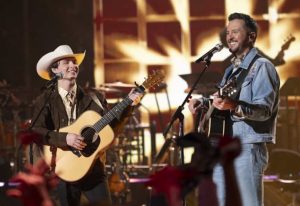
Foster isn’t here to recreate the past. He’s here to remind us that the soul of country music never needed to change—it just needed to be heard again.
And George Knew It
So when George Strait whispered those words backstage—“I want to adopt that kid”—he wasn’t just joking. He was witnessing a rare thing in the industry: someone worthy. Someone real. Someone who might just carry that weight into the next generation.
Because what happened on that stage wasn’t just a debut.
It was a beginning.