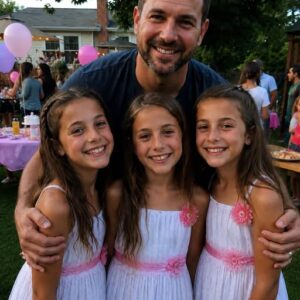
He was never meant for this. A boy once shielded from noise now stands exposed to a public that treats grief as content. Moments meant for mourning are dissected—his posture, his silence, his presence—until loss becomes spectacle. They do not see a child standing in sorrow; they see a symbol they feel entitled to interpret.
He did not choose the spotlight, nor the shadows cast by a life built on attention. His childhood was deliberately narrowed and protected—quiet routines, guarded spaces, a refuge designed to keep life unperformed. It was a world where identity could grow without an audience, where privacy was not a privilege but a right.
Then came loss, and with it, intrusion. What was personal became headline material. Stillness was treated as meaning. Height became commentary. Silence was read as statement. The sanctuary collapsed under a gaze that arrived too late and stayed too long.
His answer has not been rebellion or display, but distance. In choosing absence, he claims agency. He carries grief without narrating it, selfhood without branding it—asserting something rare and necessary: the right of a child, even one born into noise, to be unfinished in peace.