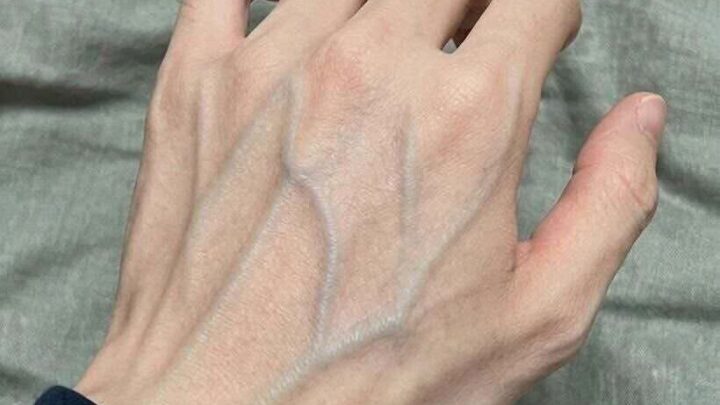
In many cases, the pattern is harmless and appears after exposure to cold. If it fades once the skin warms up, it is often considered a temporary circulation response rather than a serious problem.
However, persistent livedo reticularis can sometimes be linked to vascular disease, autoimmune conditions, blood-clotting disorders, or reactions to certain medications. Pain, numbness, ulcers, headaches, or vision changes may be warning signs.
See a healthcare professional if the discoloration does not disappear with warmth, keeps getting worse, or appears with pain, sores, joint problems, or neurological symptoms. Treatment depends on the underlying cause, while harmless cases often only require keeping warm and protecting the skin.