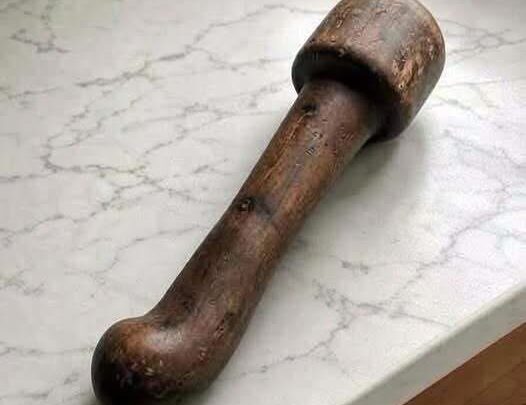
One of the most likely purposes of this wooden tool was to mash boiled potatoes. After the potatoes had been cooked until tender, the rounded end could be pressed repeatedly against them to break them apart and create a softer texture. Similar tools could also be used to crush cooked vegetables, soften fruit, and prepare other ingredients that needed to be broken down by hand. Depending on its exact shape, the utensil may have served a purpose similar to a primitive pestle. Its simple design allowed cooks to perform several related tasks without needing a different tool for every ingredient.
The main advantage of wooden kitchen utensils was their simplicity and durability. A well-made hardwood tool could withstand years of regular use, provided it was cleaned and stored properly. Unlike modern appliances, it had no motor, batteries, electrical components, or complicated parts that could stop working. The cook supplied all the force needed to crush or soften the ingredients, making the tool dependable and easy to use. In households where most food preparation was done by hand, a single sturdy utensil could remain useful for decades and sometimes even be passed down through generations.
Today, blenders, food processors, and electric mixers can complete many of these tasks much faster, but the basic principle behind the old wooden tool remains the same. Applying pressure changes the texture of soft foods, turning cooked potatoes into mash or breaking vegetables and fruit into smaller, softer pieces. Although the utensil may seem puzzling to modern observers, its purpose becomes clearer when viewed in the context of traditional cooking. It represents a time when kitchen tools were valued for their practicality, versatility, and long-lasting construction. Sometimes, the simplest tools were the ones that made everyday cooking possible.