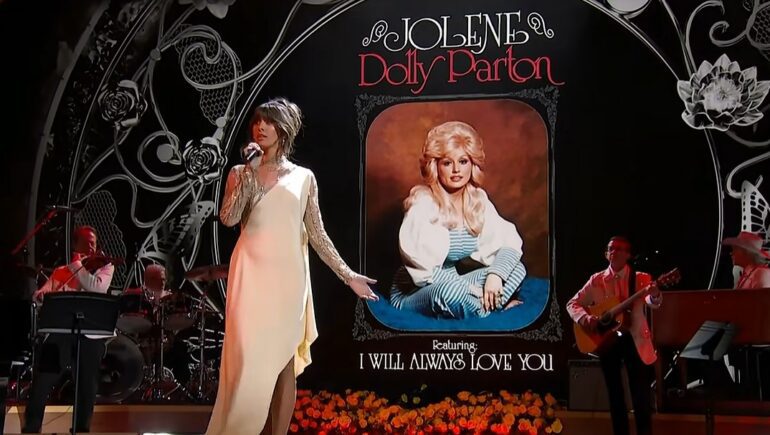
Ella Langley’s interpretation of Dolly Parton’s “Jolene” became a point of debate at a televised Country Music Association tribute to Parton. Some viewers questioned whether the song fit Langley’s voice and style; others welcomed her decision to give the familiar classic a distinct arrangement rather than simply echo Parton’s recording.
Langley performed the song as part of CMA Presents I Will Always Love You: A Celebration of Dolly Parton. The special brought together performers to recognize Parton’s influence, while Langley’s take on one of her best-known songs drew particular attention. The differing reactions focused less on the choice of song itself than on how it was delivered.
A different approach to a familiar song

Released in 1973, “Jolene” was the title track of Parton’s 13th studio album. She wrote it in 1972, around the same period as “I Will Always Love You.” Its familiar melody and Parton’s distinctive vocal performance have made it a challenging song for other singers to interpret without inviting comparisons.
Langley changed elements of the original arrangement for the tribute. It was also not her first time performing a cover of “Jolene,” giving her another opportunity to approach the song in her own musical style. The article describes the original as sitting in a relatively high vocal register, a quality that can make reproducing its sound demanding. Other performers, including Kelsea Ballerini and Lady A, have adjusted the key or lowered parts of the song in their own performances.
That context helps explain why a different vocal approach can attract scrutiny. Some viewers felt Langley’s rendition did not play to her strengths or align with the style they associate with her. Others defended the choice to reinterpret the song instead of trying to duplicate Parton’s delivery. The responses reflected competing expectations for a tribute: faithfulness to a celebrated original, or room for a performer’s own sound.
The split reaction does not settle whether Langley’s arrangement was a good fit. It shows the particular challenge of taking on a song so closely identified with its original singer. With “Jolene,” even a changed arrangement can invite listeners to measure a new performance against the one that made the song enduringly familiar.