ABBA’s “Super Trouper” turns the spectacle of a live show into a song about the private loneliness that applause cannot fix. Written in a hurry as the group completed its 1980 album, it became both the record’s title track and one of its defining songs.
A last-minute title track
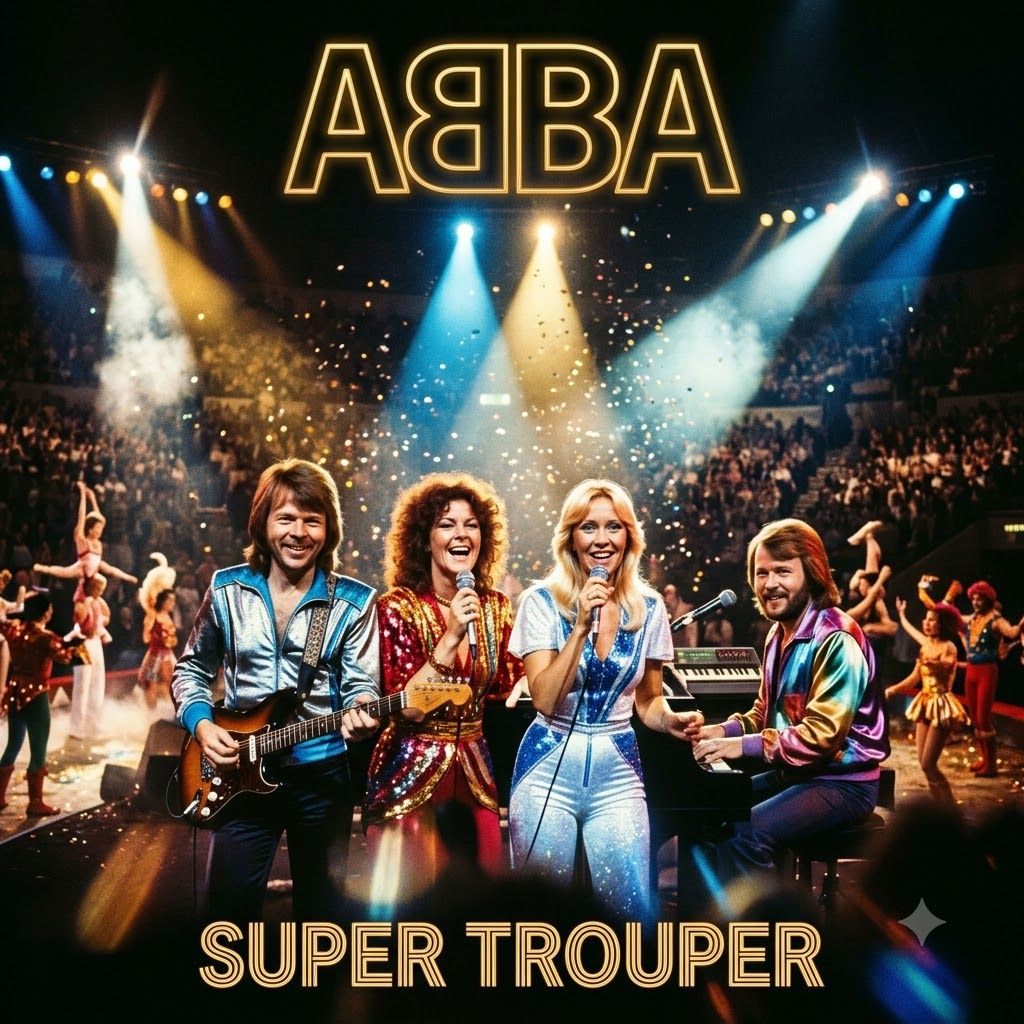
By early October 1980, Benny Andersson and Björn Ulvaeus had nine songs ready for the album but still needed a tenth, preferably one that could be released as a single. They wrote “Super Trouper” over a few intense days. The title had already been chosen for the album, named for a powerful spotlight used to sweep across large venues; by chance, the phrase also suited their new song.
Anni-Frid Lyngstad, known as Frida, took the lead vocal. The verses have a weary, conversational quality, while the broad chorus gives the track the scale of a performance made for a crowd. That contrast reflects the story: an entertainer is on the road, calling from Glasgow and worn down by the routine of eating, sleeping and singing.
One face in the crowd
The lyric sets the performer before thousands of cheering people, yet asks how someone can feel lonely among “twenty thousand friends.” The emotional shift comes with the expectation that one particular person will be in the audience. The spotlight does not end the singer’s isolation; the prospect of being seen by someone familiar offers comfort.
That tension gives the upbeat arrangement its tenderness. The melody is bright and the pulse steady, but the song does not present fame as an answer to loneliness. Instead, it contrasts public adoration with the need for private affection: a vast audience can cheer, while one person’s presence makes the night feel different.
Released in November 1980, “Super Trouper” spent three weeks at No. 1 on the UK Singles Chart. It became ABBA’s ninth and final British chart-topper, while the album also reached the top of the UK chart. More than a celebration of show business, the song endures as a portrait of the distance between the bright stage and the person standing beneath its lights.