Marty Robbins had spent years racing without the speed to keep pace with NASCAR’s leading drivers. At Talladega in May 1972, though, his Dodge suddenly began closing on the front of the field—and officials took notice.
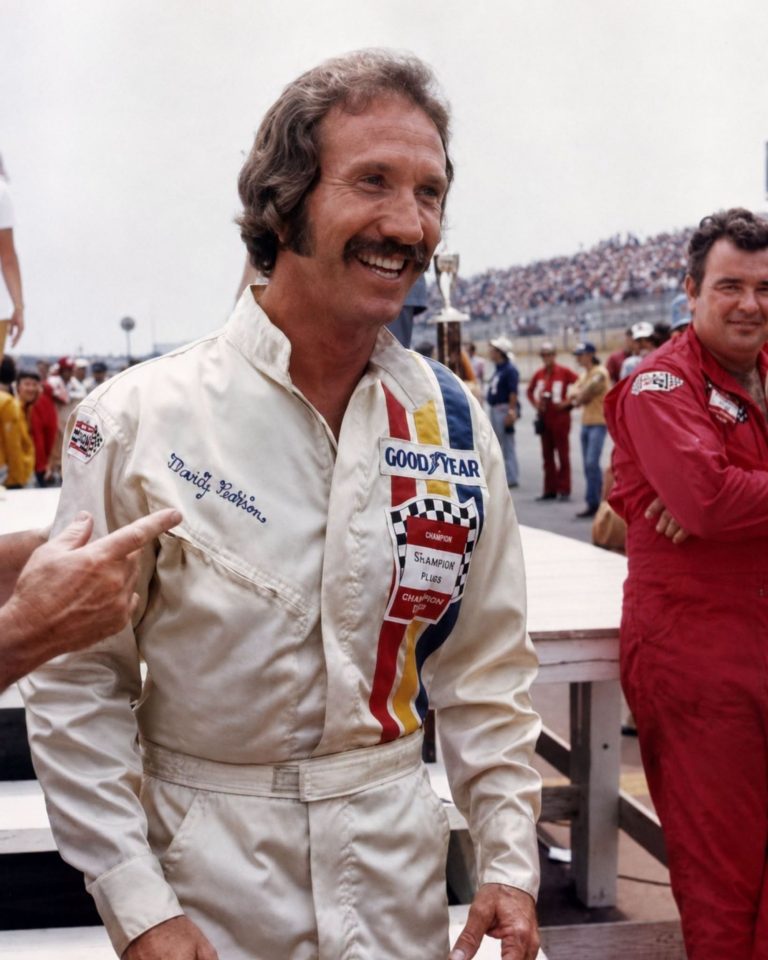
Robbins was competing in the Winston 500, where Richard Petty, Bobby Allison and David Pearson were among the established stars. His car had qualified well behind the leaders, but during the race it ran about 15 miles per hour faster than it had in qualifying. Robbins completed 179 of the race’s 188 laps before withdrawing.
The unexpected speed had a mechanical explanation. A carburetor restriction intended to limit engine power had been defeated, though accounts differ on the precise method. Officials considered recognizing Robbins as Rookie of the Race. He declined the honor and acknowledged that the car had not complied with the rules. His reason for wanting the extra speed was straightforward: he wanted to experience running near the front.
Racing was no publicity stop
Robbins had begun racing small cars in the 1950s and moved on to modified stock cars at Nashville Speedway. He made his first start in NASCAR’s top division in 1966. His music career kept him from racing full-time, but he invested in cars and competed seriously, rather than treating the track as a celebrity appearance.
The two careers sometimes competed for the same hours. In 1965, Robbins arranged to perform in the Grand Ole Opry’s final segment so he could race at Nashville Speedway first. His schedule illustrates how racing fitted around his musical commitments, not that it was merely a publicity exercise.
Talladega offered a rare chance to run among drivers he usually saw pulling away or lapping him. But Robbins recognized the difference between a genuine result and one enabled by an illegal advantage. He did not take the Rookie of the Race recognition.
A long-running pursuit
Robbins made 35 starts in NASCAR’s top division between 1966 and 1982. His best result was fifth at Michigan in 1974. He continued racing after heart surgery in 1970 and returned to the track after a brief withdrawal in the mid-1970s.
His final NASCAR start came at Atlanta on November 7, 1982. He finished 33rd after an accident. Robbins died of a heart attack on December 8, aged 57, a month after that race.
The Talladega episode is remembered for its humor, but it also shows how seriously Robbins took racing. The man behind “El Paso” had fame and success in music; on the track, he wanted to test himself against professionals—and knew when a result did not belong to him.