Bob Seger’s “We’ve Got Tonight” began as a solitary reflection. When Kenny Rogers and Sheena Easton recorded it together in 1983, they shifted the song’s perspective: its lonely plea became a conversation between two people weighing the comfort and uncertainty of a night together.
Seger wrote and first recorded the song for his 1978 album Stranger in Town. His version carries the perspective of someone awake with regret, aware that a connection might last only until morning. Rogers and Easton’s duet gives both sides of that encounter a voice.
A quick collaboration
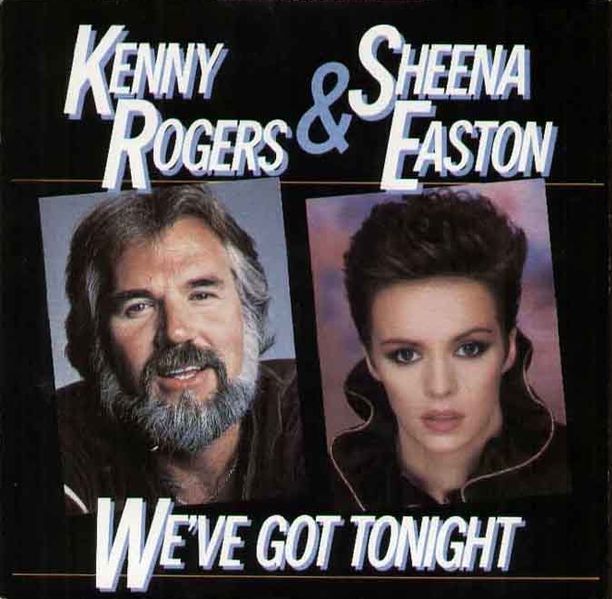
The pairing came together on a tight schedule. Both singers were associated with the EMI America–Liberty orbit, and label chairman Larry Mazza reportedly encouraged them to work together. Rogers called Easton on December 23, 1982, to propose the duet. They rehearsed with a piano the next day and recorded it several days later.
The speed of the collaboration is matched by a polished arrangement. Producer David Foster framed the song in the smooth adult-contemporary style of early-1980s crossover pop, building gradually while leaving space for each singer’s phrasing.
Two voices, one uncertain night
Rogers brings a grainy, weathered country-pop delivery; Easton answers in a brighter, higher register. Their contrast shapes the drama. Rather than having one singer dominate, the arrangement lets their voices meet as the emotion grows. Rogers’s lines sound like a request for closeness, while Easton’s response holds both vulnerability and caution.
That exchange also changes the feel of Seger’s original. Where his recording leans into rock introspection, the duet plays like an intimate scene between two people negotiating loneliness, desire and what they can promise. Its tenderness comes from the uncertainty, not from a neat resolution.
The single reached No. 1 on Billboard’s Hot Country Singles chart and No. 6 on the Billboard Hot 100 in the United States. In the United Kingdom, it peaked at No. 28. The chart success reflected the recording’s crossover reach, but the song’s central appeal is more personal: its characters do not know what tomorrow will bring, and the duet allows that ambiguity to remain.
Rogers and Easton made a familiar song feel newly shared. Their voices do not settle its question of what comes next; they make the moment before that answer the heart of the performance.