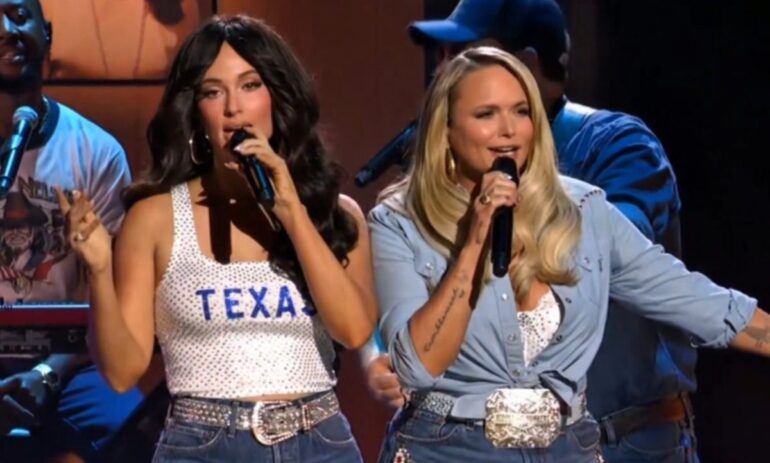
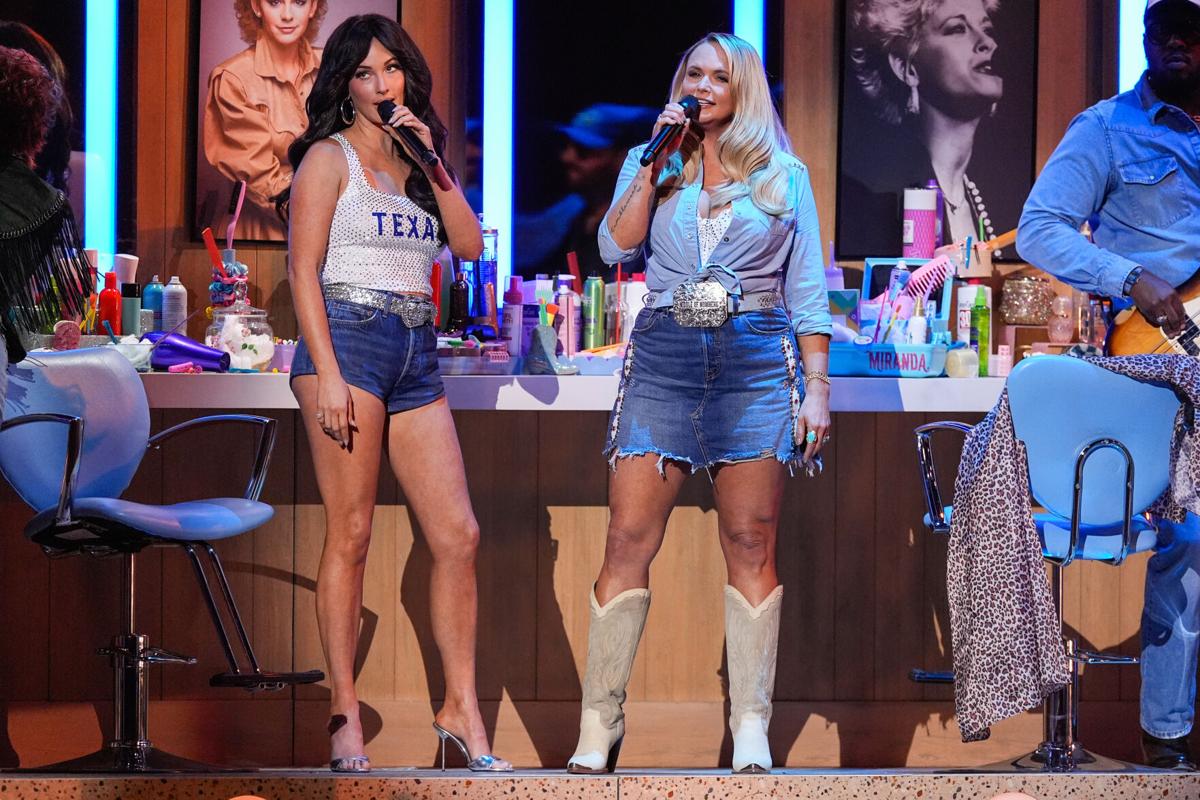
Kacey Musgraves and Miranda Lambert’s history with “Mama’s Broken Heart” began as a disagreement over a song and became a subject of country-music speculation. At the 60th Annual CMA Awards, the singers brought that history into the spotlight with their first televised performance together, singing “Horses and Divorces,” their duet from Musgraves’ album Middle of Nowhere.
The staging leaned into the song’s personal backstory: the pair performed inside a vintage beauty shop and shared a shot of tequila beforehand. Lambert also wore a belt buckle bearing the album title. The performance included a nod to Willie Nelson, whom both artists admire.
A song at the center of the story
Musgraves co-wrote “Mama’s Broken Heart” with Brandy Clark and Shane McAnally. She had hoped to record it for her debut album and had imagined it as her first single. The song was instead recorded by Lambert and released in 2013 on Four the Record. Musgraves eventually agreed to the arrangement and contributed background vocals, but the circumstances reportedly left her frustrated.
The song became a major hit for Lambert, reaching No. 2 on Billboard’s Country Airplay chart and earning 3× Platinum certification from the RIAA. Their strained relationship drew fresh attention at the 2013 CMA Awards, where Lambert won Female Vocalist of the Year and Musgraves was also nominated. Musgraves won New Artist of the Year, and viewers discussed her expression during Lambert’s acceptance speech. The two had known each other since around 2000, making the reported rift more striking.
From tension to collaboration
“Horses and Divorces” turns their history into material for a duet rather than pretending the disagreement never happened. The song appeared on Middle of Nowhere and was nominated for CMA Musical Event of the Year; the award went to Morgan Wallen, HARDY, Tim McGraw and Eric Church for “McArthur.” Musgraves and Lambert had performed the duet at some of Musgraves’ live shows before their televised appearance.
Lambert has said she wants the pair to set an example for younger women in country music. Their CMA performance gave a national audience a look at a collaboration shaped by a complicated past—and by the decision to make that past part of the song.