When Conway Twitty released “You’ve Never Been This Far Before” in July 1973, the song’s intimate story made it a flashpoint for country radio. Some stations refused to play it over its sexual implications, even as the single found a much wider audience.
Twitty recorded the song on April 4 at Bradley’s Barn in Mount Juliet, Tennessee, with Owen Bradley producing. Its narrator describes a moment of hesitation and discovery, recognizing that an emotional threshold is about to be crossed. Rather than deliver the scene with dramatic force, Twitty sings in a measured, conversational style. That restraint leaves the tension in the words and gives the performance its close, personal feel.
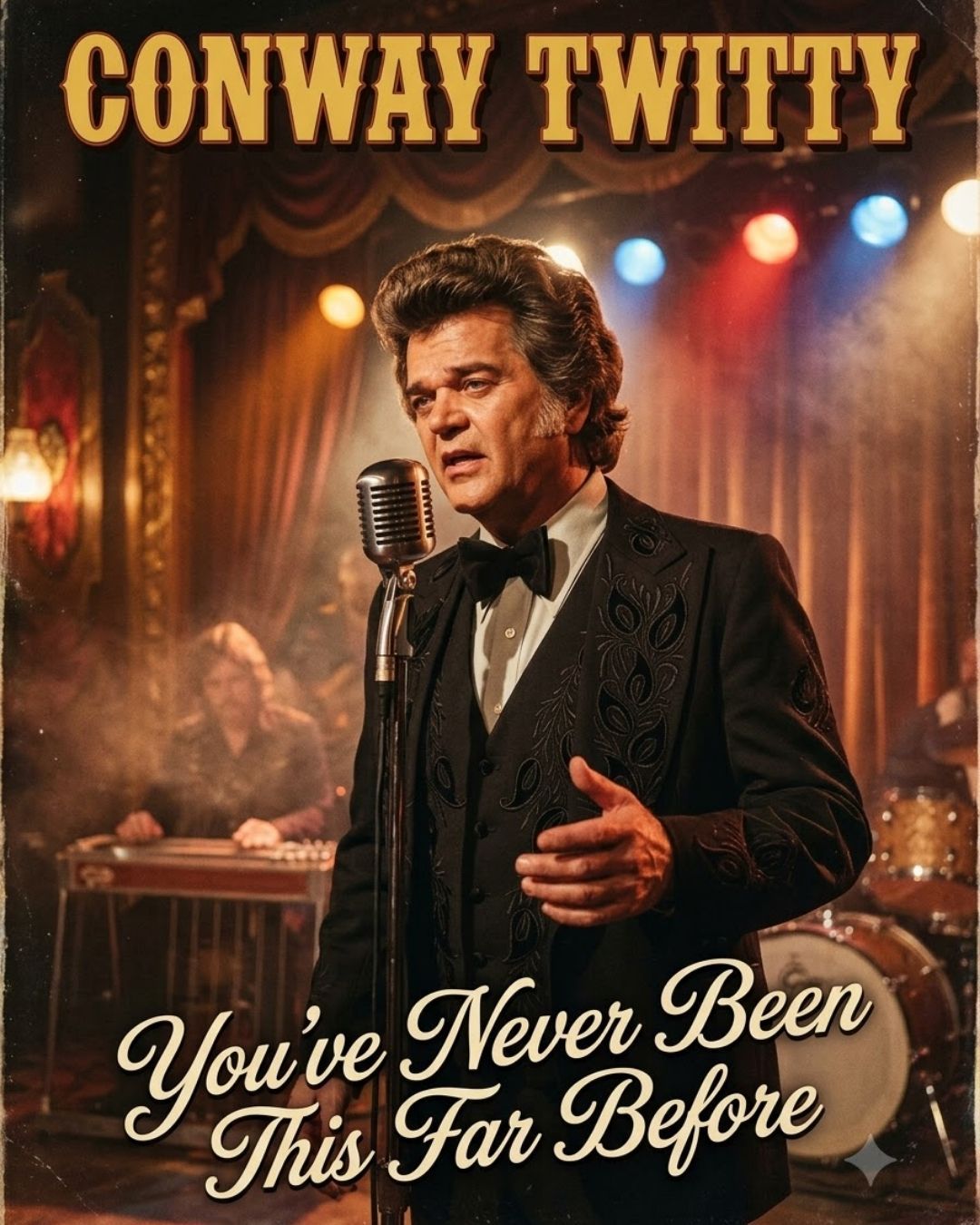
The arrangement stays within familiar country territory, with steel guitar, fiddle and piano set against a steady rhythm section. Those elements support the vocal without competing with it. The result was a recording shaped by conventional country craft, but centered on a subject that some broadcasters considered too suggestive for the format.
A dispute over what belonged on country radio
The objections reflected a broader question about how openly popular music could address intimacy. For stations that banned the single, its implications crossed a line; for listeners who embraced it, the restrained delivery and clear melody offered an affecting romantic story. The disagreement became part of the record’s identity, rather than something its success settled.
“You’ve Never Been This Far Before” reached No. 1 on Billboard’s Hot Country Singles chart and held that position for three weeks. It also peaked at No. 22 on the Billboard Hot 100, marking a notable crossover for Twitty. Its chart run put the contrast into focus: a song some stations kept off the air was also connecting with a large audience.
The single’s place in Twitty’s catalogue rests on that tension between familiarity and provocation. Its country instrumentation and direct storytelling sit alongside a subject that prompted broadcasters to draw boundaries. Twitty’s controlled performance keeps both sides audible: tenderness in the delivery, and uncertainty in the scene. Heard today, the recording offers a glimpse of country music negotiating what could be said—and played—on the radio in the early 1970s.