A rhythm Björn Ulvaeus developed while jogging became the foundation of ABBA’s “Take A Chance On Me,” a single that put vocal percussion at the centre of its pop arrangement. Released in January 1978, it paired that insistent refrain with the group’s layered harmonies and a lyric about asking a hesitant partner to take a chance on love.
The song was the second single from ABBA’s fifth studio album, The Album. Its central rhythmic idea began with Ulvaeus chanting a jogger’s cadence. Rather than building the track around a conventional instrumental hook, he and Benny Andersson shaped the song around the repeated vocal phrase.
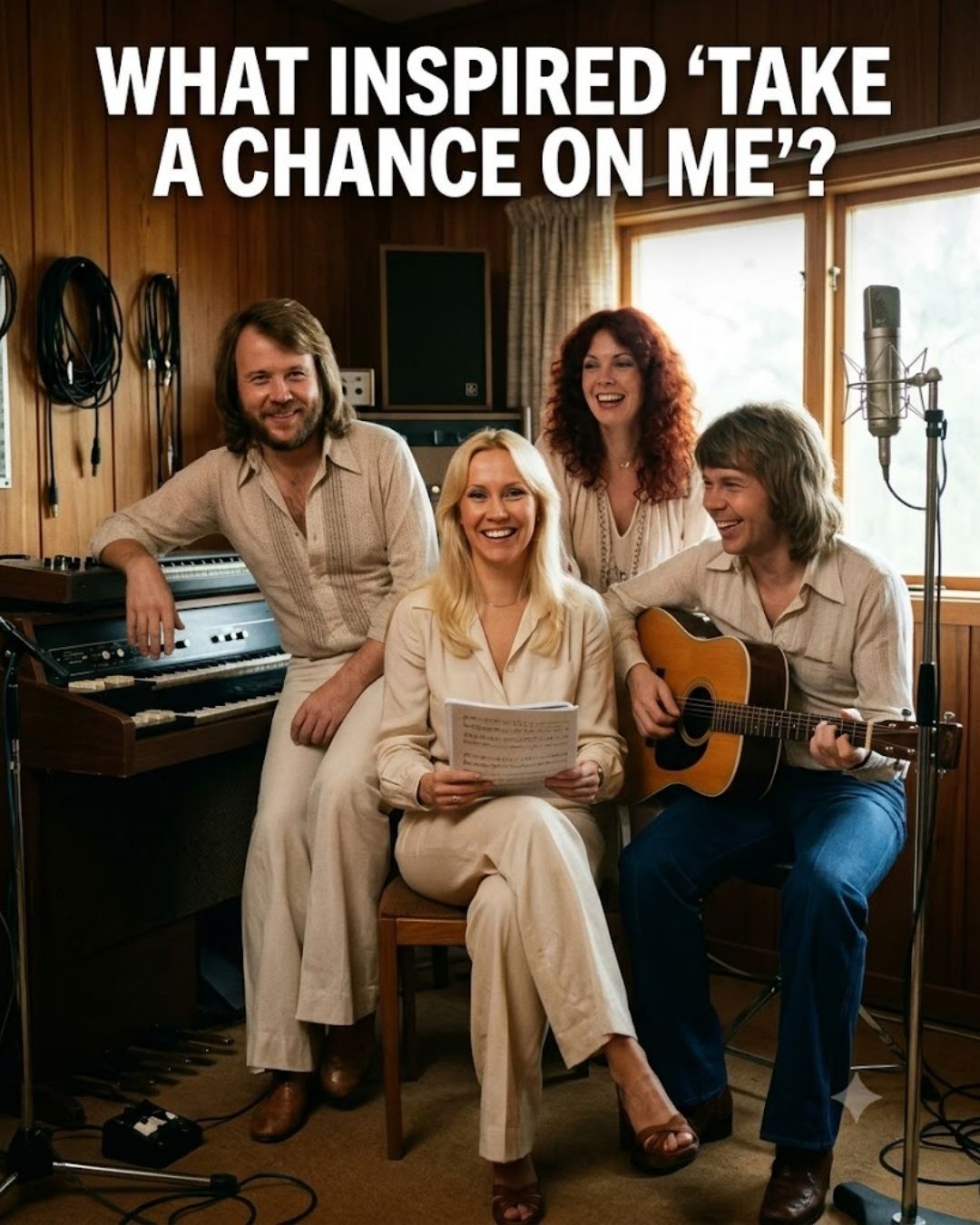
Voices as the rhythm section
In the recording, Agnetha Fältskog and Anni-Frid Lyngstad’s voices were layered to create a pulsing backing for the melody. The result gave the vocal arrangement an unusually prominent rhythmic role, while the refrain made the song’s central phrase immediately recognizable. The approach shows how a simple vocal pattern could carry much of a pop track’s momentum without relying on a prominent guitar riff or synthesizer line.
The lyric presents its appeal for romance with confidence, but also acknowledges hesitation. Its narrator asks someone wary of another heartbreak to take a leap of faith. That mix of directness and optimism gave the song a playful tone, matched by the repetition of its central invitation.
The single’s chart performance confirmed its international reach. It reached number one on the UK Singles Chart and peaked at number three on the US Billboard Hot 100. Its accompanying music video added a visual counterpart to the recording, showing the quartet performing together in studio and landmark settings.
“Take A Chance On Me” has remained part of ABBA’s best-known catalogue in the decades since its release. Artists have covered it, and it featured in the film Mamma Mia! Its continuing life with new listeners reflects the durability of the song’s combination of a memorable vocal hook, layered harmonies and an accessible romantic theme.
What began as a jogging rhythm became the track’s defining musical feature: not just a refrain to sing along with, but the pulse around which the recording was built.