When Jackson Browne released The Pretender in 1976, the album’s questions about adulthood and fading ideals sat alongside a major change in his private life. Browne was 27 and raising his two-year-old son, Ethan, alone after the death of his wife, Phyllis Major.
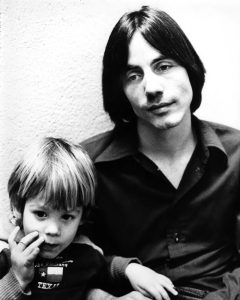
Browne and Major married in 1975, after Ethan was born. Major died by suicide in March 1976. In the months that followed, Browne continued working as his career was gaining momentum, while becoming the only parent in the household.
The album’s arrival so close to the loss can invite listeners to read it as a direct account of grief. Browne did not reduce its meaning to that single explanation. Its concerns also included work, compromise, routine and the distance between youthful expectations and adult life. Browne later described its central character as trying to make sense of adulthood as youthful certainty wears away.
Life beyond the record
The immediate, practical shift was in Browne’s daily life. He continued to record and tour, but caring for Ethan became a central responsibility rather than something on the margins of an artist’s schedule. Accounts of the period later continued to describe Browne as a single father whose son was two when Major died.
Ethan eventually developed a creative career of his own. He worked as an actor and later became involved in music, founding a record label connected to his father’s company. That later chapter is part of the family’s story, but it does not lessen the loss Browne and his young son faced in 1976.
Browne’s songs often considered what happens when adult life fails to match the plans people once held. The Pretender explored that tension through themes broader than one person’s biography. Yet the circumstances around its release gave those questions a particular immediacy: Browne was navigating responsibility and loss while continuing a career that was expanding.
The year brought a marriage’s end through Major’s death, a new reality as a parent, and a significant moment in Browne’s musical career. The record did not offer a single explanation for those events. Its place in his life is also marked by the work of raising Ethan while continuing to write, record and perform.