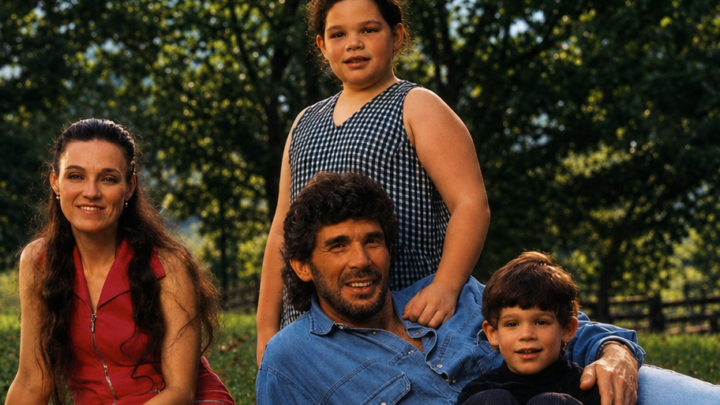
Bobby Bare Jr. was five years old when he recorded “Daddy What If” beside his father. The song, written by Shel Silverstein as a conversation between a boy and his father, kept the child’s unpolished voice at its center. Released on Bare’s 1973 album Lullabys, Legends and Lies, it climbed to No. 2 on the country chart.

The success brought the Bare family further into the spotlight. On Singin’ in the Kitchen, Bobby Bare’s wife, Jeannie, and their children—Cari, Shannon and Bobby Jr.—joined in on a collection largely built around Silverstein’s songs. The album’s conversational feel reflected a family making music together, and the Bares toured with it for a summer.
For Bobby Jr., performing alongside his father was appealing. He later recalled wanting to be onstage because that was where his father was. But the family’s brief run as a performing act raised a question: would music remain a shared activity, or become a job for a child?
The question became more pointed after the children appeared on Hee Haw. They contributed the witch’s scream heard in “Marie Laveau,” another Silverstein song from the album. The program wanted to hire Bobby Jr. Bare declined the offer. He later said he wanted his children to have a childhood rather than be drawn into professional entertainment.
Bobby Jr. also recalled that his parents worried early success could bring a child unnatural attention and leave him feeling finished before his teens. The decision had personal context for his father. Bare’s mother died in 1941, when he was five, and his father could not care for all three children. The siblings were separated among relatives and other households. Bare later worked on farms and in factories before building a career in country music.
His son was not kept away from music. The Bare household welcomed songwriters, including Silverstein, and Bobby Jr. later described songwriting as the family’s highest calling. When the summer tour ended, the children returned to school rather than continuing as a family act.
Bobby Jr. eventually chose his own musical direction, playing rock clubs and making original music distinct from his father’s country career. Their roles shifted in 2005, when the younger Bare produced The Moon Was Blue for his father. The boy who once sang beside him was now helping shape a record from the control room—a collaboration made possible, in part, by the space each had been allowed to occupy.