Elvis Presley wanted Jerry Reed’s “Guitar Man” for a September 1967 recording session in Nashville. But the song’s distinctive guitar part proved difficult to recreate without the musician who had written and recorded it.
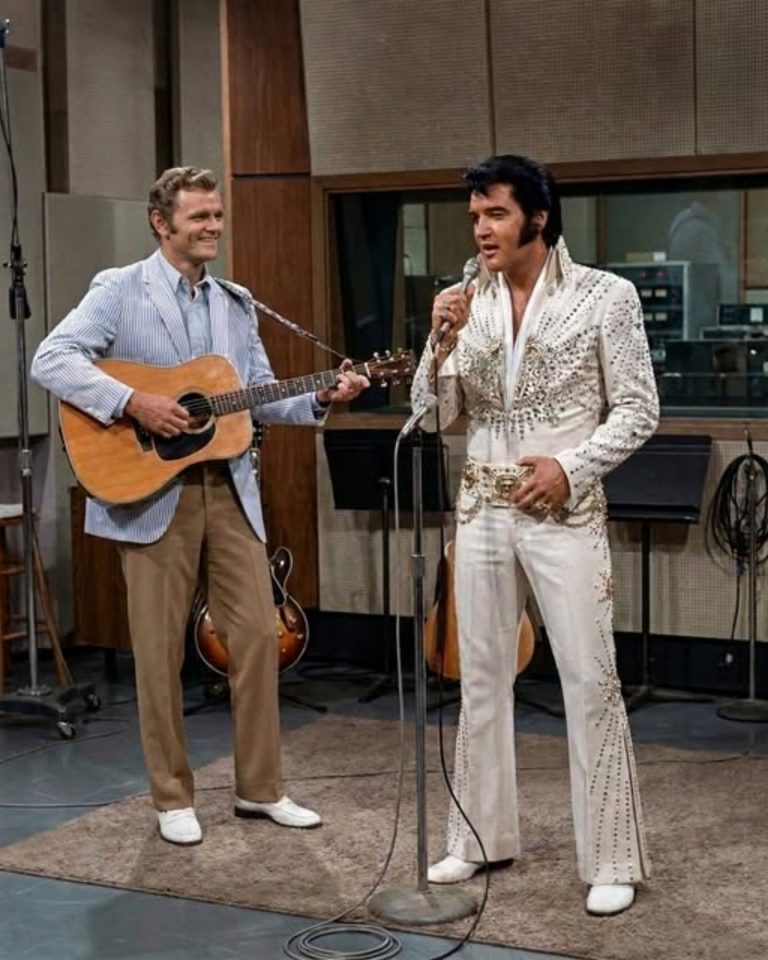
Reed’s 1967 single had reached No. 53 on Billboard’s country chart. Its guitar pattern carried more than the chord changes: bass notes, clipped chords and a restless melody moved together, giving the song much of its character. Presley wanted that sound for his version, and the accomplished Nashville players at the session struggled to reproduce it convincingly.
The part reflected Reed’s distinctive approach to the instrument. Influenced by country, blues, gospel and players including Merle Travis and Chet Atkins, he developed a fingerstyle technique in which his thumb and fingers handled separate musical roles. The result could sound casual and playful, despite the precision behind it.
Reed had built a career as a guitarist and songwriter, but widespread recognition had not yet followed. His “Guitar Man” told of a young musician looking for work and a stage, delivered with humor and forward motion. The song caught Presley’s attention even though Reed’s recording had made only a modest chart showing.
A second Presley session
Reed was brought into the studio to play the part. His contribution gave Presley’s recording the motion the session had been missing, without requiring him to simplify the guitar figure into conventional accompaniment.
Reed also played on Presley’s version of “Big Boss Man,” the blues song associated with Jimmy Reed, who was not related to Jerry. The guitar helped keep the performance moving rather than settling into a straightforward blues arrangement. Presley returned to Reed’s work in January 1968, recording “U.S. Male.”
Those sessions put Reed’s songs and playing in front of a much larger audience, although his own profile grew over time. “Amos Moses” and “When You’re Hot, You’re Hot” helped establish him as a country star; the latter reached No. 1 and earned him a Grammy. He also played Cledus “Snowman” Snow in Smokey and the Bandit and wrote “East Bound and Down.”
The “Guitar Man” connection resurfaced in 1980, when producer Felton Jarvis paired Presley’s earlier vocal with a newly recorded instrumental track featuring Reed. That version reached No. 1 on the country chart in 1981.
Reed’s career became known for its humor, songs and guitar work. The 1967 session, however, captured a specific reason his playing stood apart: even highly skilled musicians could not make the song’s signature part sound quite the same without the guitarist who created it.