Lynyrd Skynyrd’s Street Survivors arrived on October 17, 1977, with a cover showing the band surrounded by flames. Three days later, a plane crash killed six people connected to the group, including singer Ronnie Van Zant and guitarist Steve Gaines, changing how the image was seen.
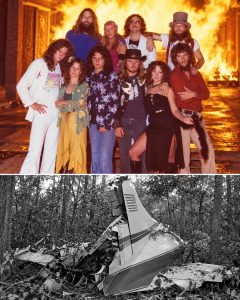
On October 20, the band was traveling from Greenville, South Carolina, to Baton Rouge aboard a chartered Convair 240. The aircraft began running low on fuel, and its pilots tried to reach an airport near McComb, Mississippi. It lost altitude and crashed through trees near Gillsburg.
Van Zant, Gaines, backup singer Cassie Gaines, road manager Dean Kilpatrick, pilot Walter McCreary and co-pilot William Gray died. Twenty other people survived.
A cover changed by events
The album photograph had been staged as a dramatic image of the band standing amid fire. After the crash, Steve Gaines appeared nearly surrounded by flames in the picture, making the sleeve especially painful for his family. His widow asked MCA Records to withdraw it.
MCA replaced the cover with another photograph from the same session, showing the band against a dark background without the flames. The original pressing remained in circulation, but the image had taken on an association its creators could not have intended. Today, copies with the original artwork are among the recognizable objects connected to the crash and the band’s history.
The timing also brought renewed attention to an earlier account involving Aerosmith. The group had considered chartering the same aircraft earlier in 1977. Reports say members of Aerosmith’s flight crew inspected the plane and raised concerns about its condition and crew; Aerosmith did not use it. Lynyrd Skynyrd later chartered the aircraft. That account is often cited as a disturbing detail of the disaster, but the crash itself was not something the album cover predicted.
The album’s lasting place
Despite the tragedy, Street Survivors continued to chart, reaching No. 5 on the Billboard album chart, the highest position Lynyrd Skynyrd had achieved to that point. It was the final studio album released during Van Zant’s lifetime.
The record’s title and original artwork had been conceived as part of a new chapter for the band. After October 20, both acquired a painful meaning shaped by events outside the music. The flames were a visual effect; the disaster was real. That stark contrast is why the original cover remains so closely associated with the crash.