George Jones’s first chart-topping single came from a recording session marked by sore hands, repeated attempts and a vocal flaw the musicians decided to keep.
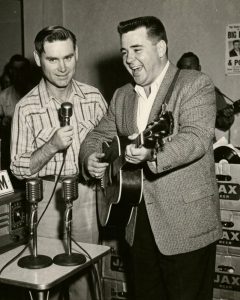
The song was “White Lightning,” written by J.P. Richardson, better known as the Big Bopper. At Nashville’s Quonset Hut, bassist Buddy Killen played the opening figure over and over on upright bass. Jones later recalled that Killen’s fingers blistered, bandages were needed and the bassist threatened to leave.
Jones was drinking during the session and struggled to get through the vocal cleanly. The recording’s reputation eventually centered on a claim that it took 83 attempts. But producer Don Pierce later disputed that figure: he remembered about 11 serious tries and thought Killen may have used “83” sarcastically to describe a frustrating day. Pierce also recalled that the master came from an earlier performance, not the final attempt. Jones slurred one word, but the take was kept.
A song with a personal connection
Richardson and Jones came from overlapping Texas radio and country-music circles. Richardson died in February 1959 in the plane crash that also killed Buddy Holly and Ritchie Valens. Jones recorded “White Lightning” around that time, and the song became one of the last major pieces of Richardson’s writing to reach the public.
Its subject was moonshine, and its rowdy sound contrasted with the difficult circumstances of the session. Although the precise number of takes remains disputed, the accounts agree that the recording was hard going. The story endured not because every detail was settled, but because the strain in the room was real.
From a rough session to the top
“White Lightning” entered Billboard’s country chart in March 1959. In April it reached No. 1, where it remained for five weeks. The single was Jones’s first chart-topper, carrying him from regional success in Texas into the national country spotlight.
Jones would later be celebrated for his control of phrasing, shaping individual syllables with precision. His first No. 1, though, was captured in far less orderly circumstances: the songwriter was gone, Jones was struggling through the vocal, and Killen’s hands were hurting. The take that made the record was not flawless. It was the one they kept—and it became the breakthrough that helped establish Jones nationally.