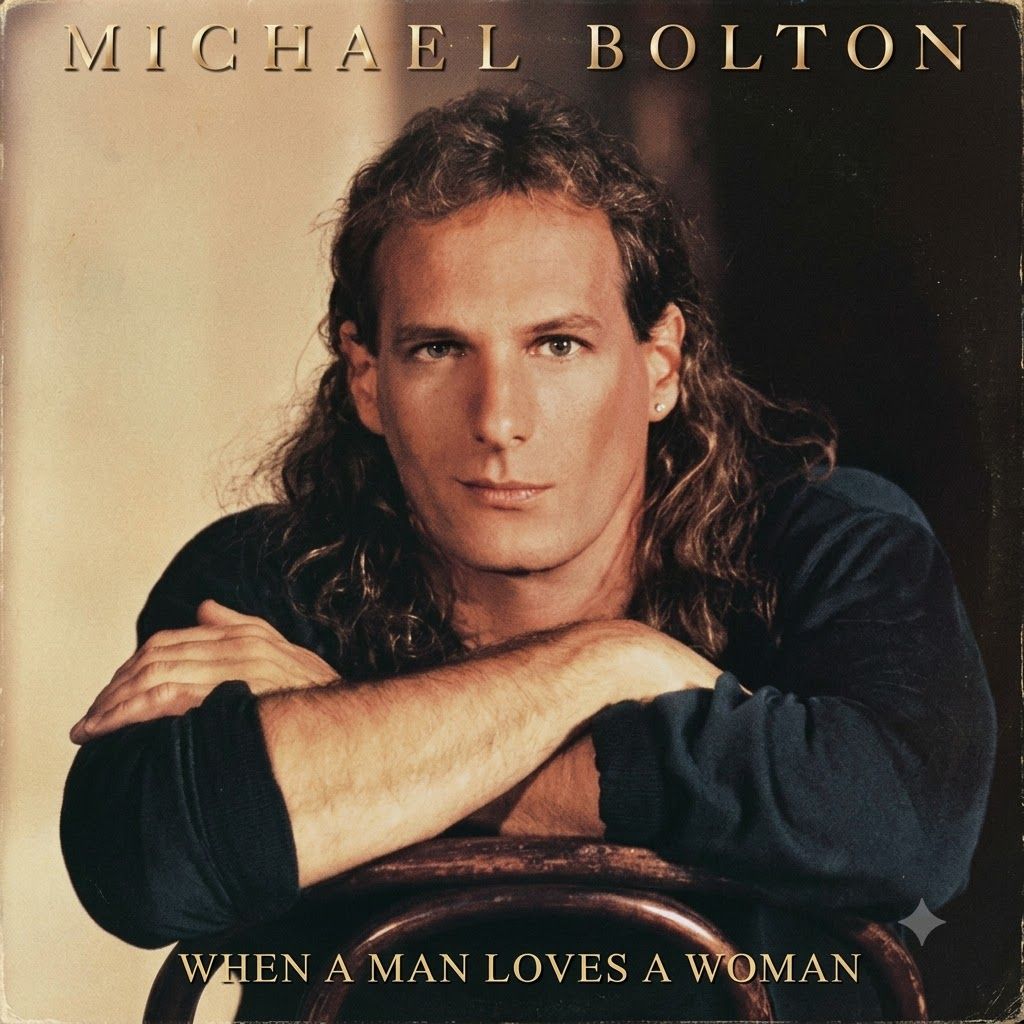
Michael Bolton approached “When a Man Loves a Woman” knowing that Percy Sledge’s 1966 recording was already a soul classic. His 1991 version would become a major hit, but getting the cover onto the album was not straightforward: one label executive argued that the original was definitive and the remake should be removed.
Bolton had long felt a connection to the song. By the time he recorded it for Time, Love & Tenderness, his career had gained momentum with the success of Soul Provider in 1989. Recording “Georgia on My Mind” had also strengthened his interest in classic soul. He wanted to bring his own voice to Sledge’s song while showing respect for the performance that had made it famous.
Finding the right take
Bolton and producer Walter Afanasieff returned to the studio eight more times in search of an arrangement that could meet the song’s high bar. In the end, Bolton considered the first take the strongest and insisted it stay on the album. The recording pairs piano, keyboards, guitar, bass, drums and layered backing vocals with Bolton’s raspy tenor, which builds from restraint to a forceful release.
The song’s title arrives immediately, placing its declaration of devotion at the center from the opening line. Bolton later noted that the chorus comes early, making the song’s central idea easy for listeners to join. The polished arrangement gave his version a different scale from Sledge’s raw Southern soul, without attempting to erase the original’s emotional weight.
A classic carried forward
Released as a single in 1991, Bolton’s recording reached No. 1 on the Billboard Hot 100 on November 23. It earned him the 1992 Grammy for Best Pop Vocal Performance, Male, and helped Time, Love & Tenderness sell more than 16 million copies worldwide.
Years later, Bolton performed the song with Sledge at a VH1 event in Chicago. Sledge acknowledged the hit as belonging to both singers, while Bolton affirmed that the song would always be Sledge’s. The exchange reflected the balance at the heart of the cover: Bolton made the classic his own, but recognized the voice and recording that came first.