Kenny Rogers had spent four days working on “Islands in the Stream” when he told producer Barry Gibb he no longer liked the song. Gibb’s solution was to bring in Dolly Parton, who happened to be at the studio. Her addition changed the recording from a solo performance into a duet that would top multiple charts in 1983.
The song began with a different possible destination. Barry, Robin and Maurice Gibb wrote it with Marvin Gaye in mind. Barry Gibb later brought it to Rogers while producing his album Eyes That See in the Dark. Rogers tried recording it alone, but after four days he was ready to give up on the track.
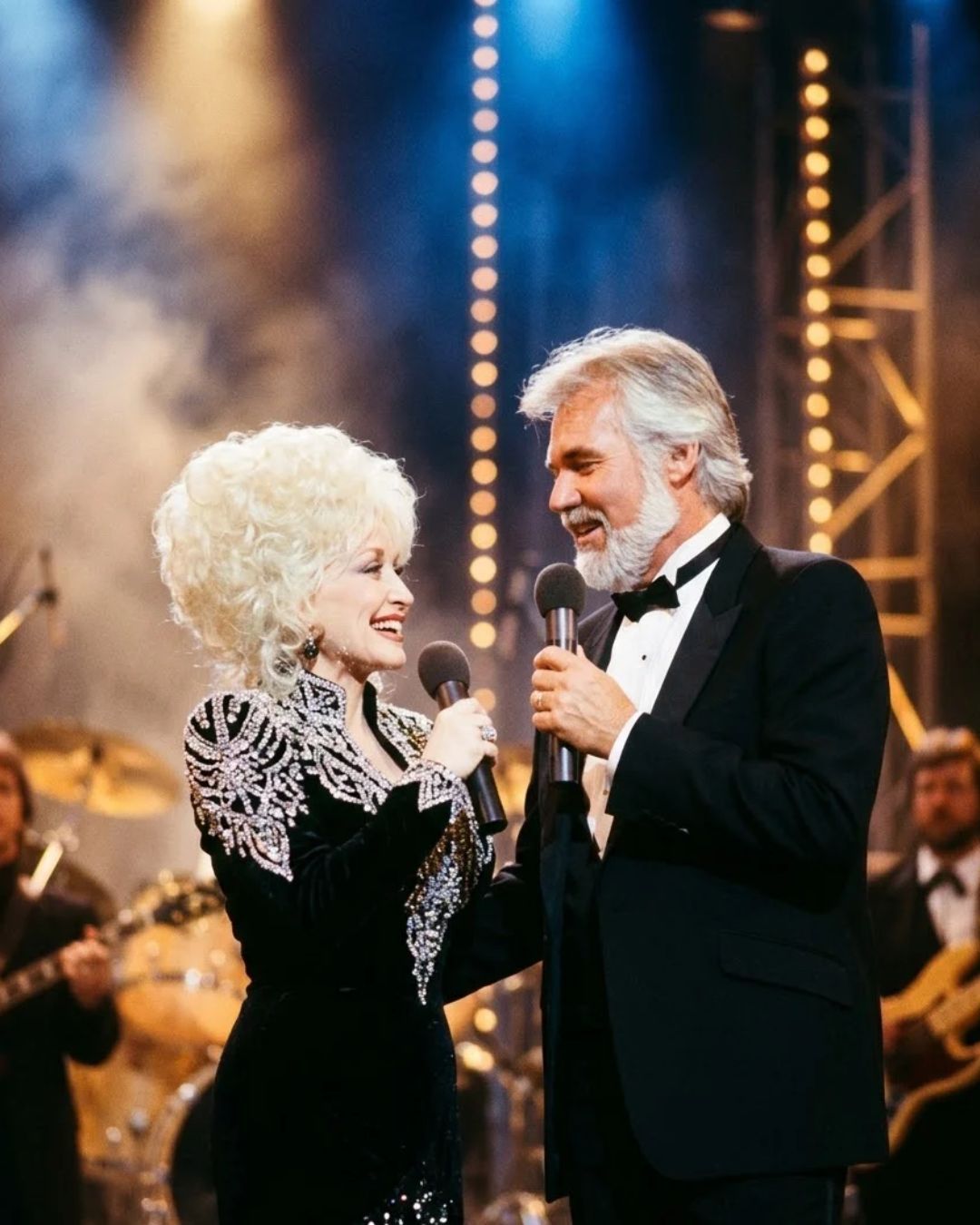
Parton’s arrival offered a new way forward. Rogers later recalled that her voice changed the song’s character. Rather than one singer delivering a lyric alone, the recording became a conversation between two voices. Rogers’ rounded tenor and Parton’s brighter, more agile voice provide contrast and counterpoint, giving each singer a distinct role in the performance.
A country-pop crossover
Released in August 1983 as the lead single from Eyes That See in the Dark, “Islands in the Stream” reached No. 1 on the Billboard Hot 100 for two weeks in late October and early November. It also topped the country and adult contemporary charts. The same recording found audiences across formats, combining Rogers’ country standing and Parton’s hit-making range with the Bee Gees’ melodic writing and Barry Gibb’s production.
The song’s lyric presents two people as a refuge for one another. The duet gives that idea a musical form: the singers answer and meet each other, making the relationship central to the sound rather than leaving the sentiment with a single voice.
“Islands in the Stream” became one of the era’s signature country-pop duets and a lasting emblem of the partnership between Rogers and Parton. Its recording history began not with a planned star pairing, but with a song Rogers had nearly abandoned—and a change in the studio that revealed what the two voices could do together.