Johnny Carson’s first decade hosting The Tonight Show was recorded night after night. Much of it is missing because NBC reused the expensive videotape, recording new programs over old ones.
The practice was routine in television’s early videotape era. Two-inch reels cost money and took up space, while networks had little reason to keep every broadcast. Once a program was considered unlikely to be rebroadcast, its tape could be wiped and returned to service.
Carson took over the show on October 1, 1962. Groucho Marx introduced him, but no complete video recording of that premiere is known to survive; photographs and audio remain. Few complete episodes from the years before May 1972 are known to exist compared with the many originally produced.
Some pieces endured through kinescopes, copies kept by guests or production participants, and audio versions made for overseas military audiences. These fragments offer glimpses of a period when Carson was establishing the show’s familiar format and welcoming comedians, musicians, public figures and other guests. They cannot fully restore the expressions, pauses and exchanges of a complete broadcast.
The turning point
A change came amid difficult contract negotiations between Carson and NBC in 1972. Accounts differ on how control and ownership developed over time, with later agreements—including Carson’s 1980 contract—further establishing his rights. The preservation divide is clearer: from May 1972 onward, the surviving Burbank broadcasts through Carson’s 1992 finale were largely retained. An instruction associated with Carson’s new control was to erase nothing.
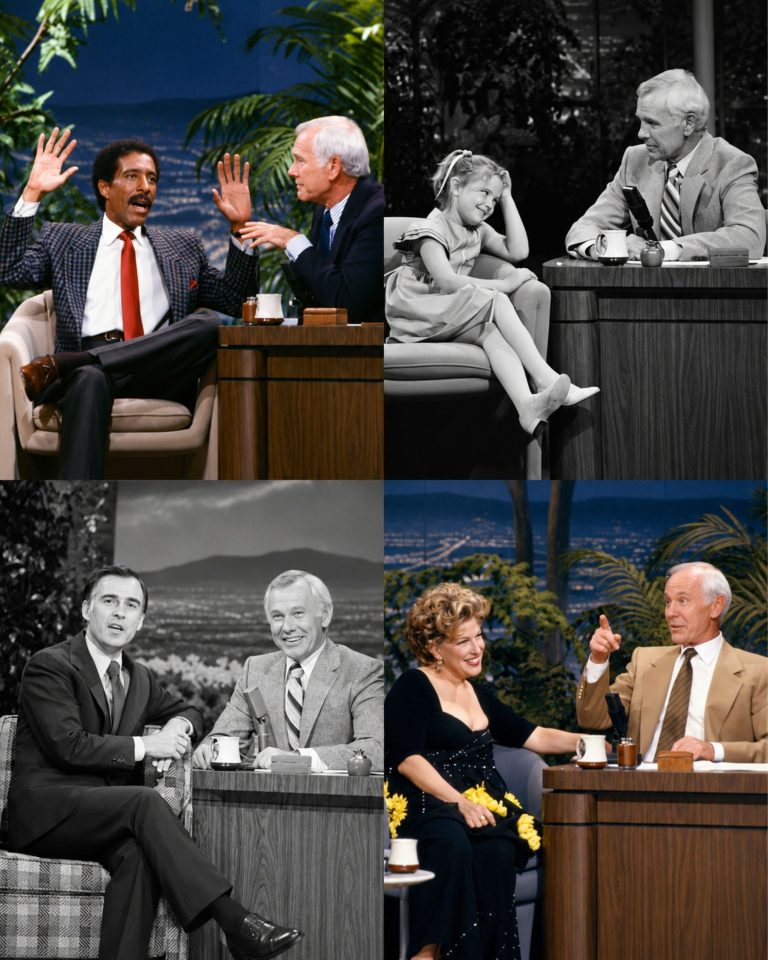
That decision helped preserve more than performances and interviews. The programs captured nightly monologues and conversations shaped by the news and culture of their time. More than 22,000 guests appeared during Carson’s tenure, according to estimates cited by television historians, from established stars to comedians at the start of their careers.
From mine to searchable archive
After Carson retired, thousands of surviving tapes were stored about 650 feet underground in a former salt mine near Hutchinson, Kansas. Its stable temperature and low humidity helped protect the magnetic recordings.
Preservation did not make the collection easy to use. In 2010, Carson Entertainment announced the completion of a digitization project covering about 3,300 hours of footage. The material was transferred to digital form, transcribed and indexed, allowing searches by names, dates and subjects rather than requiring researchers to screen whole programs.
Digitization made the surviving years easier to explore, but it could not recover what had been erased. The Carson archive therefore holds both a substantial record of American television and a striking gap: the lost early broadcasts, when a program seen in millions of homes could still vanish with the next use of its tape.