Juice Newton’s 1981 recording of “Angel of the Morning” turned a familiar song into a country-pop hit without softening its complicated emotional center. The narrator acknowledges an intimate encounter and the possibility of parting, but speaks as someone who has made her own choice—not as someone asking for a promise.
Written by Chip Taylor, the song had been recorded before Newton took it on. Evie Sands made an early version in 1967, and Merrilee Rush’s 1968 recording became the breakthrough, reaching No. 7 on the Billboard Hot 100. Its direct account of a woman accepting the consequences of a relationship stood apart: she wanted honesty, not appearances or a conventional happy ending.
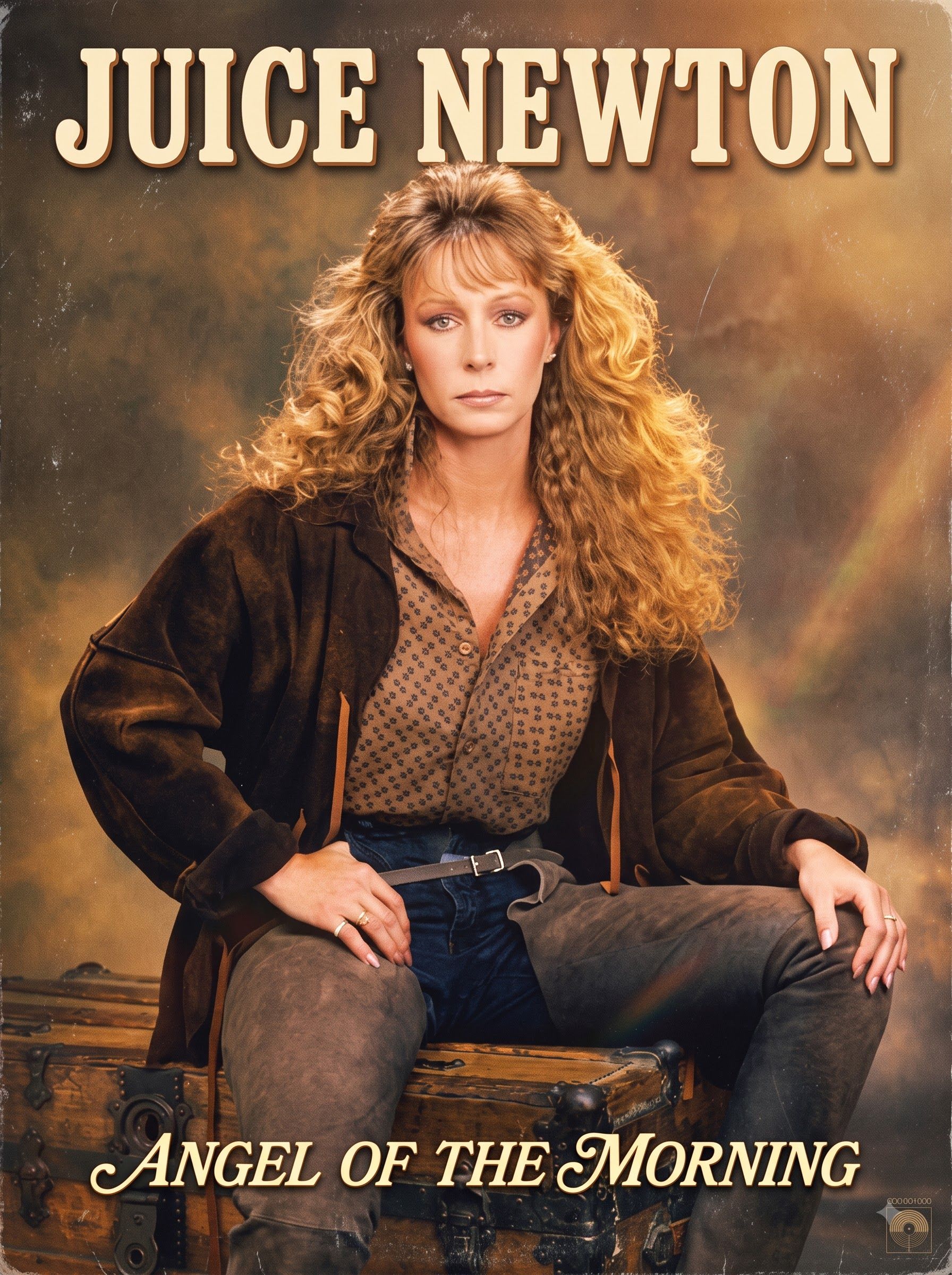
Newton’s version appeared on her 1981 album, Juice, at a point when she had yet to achieve a major commercial breakthrough. Capitol promotion executive Steve Meyer suggested the song as a way to reach a wider radio audience. Newton knew it, though she had not been especially drawn to it when it first became popular; at the time, her listening leaned more toward folk and rhythm and blues than mainstream pop.
A different voice for a familiar story
Newton’s delivery gives the song a distinct balance of country inflection and pop clarity. Rather than making the narrator sound fragile, her controlled vocal lets the tension rest in the melody and the words. The request at the heart of the song is modest: one tender gesture before morning brings separation. The narrator accepts that the other person may leave, while asking not to be judged for the choice she made.
The single climbed to No. 4 on the Billboard Hot 100. It also spent three weeks at No. 1 on Billboard’s Adult Contemporary chart and reached No. 22 on the country chart. Newton received a Grammy nomination for Best Pop Vocal Performance, Female, at the 1982 awards.
Those chart results made the recording a crossover success among pop, adult contemporary and country listeners. Its emotional meaning, however, remains open to interpretation: it can sound like a farewell, a confession or an expression of self-possession. Newton did not originate the song’s daring perspective, but her clear, measured performance carried it into a new decade—and made tenderness and independence feel compatible.