Conway Twitty’s “It’s Only Make Believe” arrived in 1958 with a sound that stood apart from the era’s upbeat teen hits. Built around a story of longing and romantic illusion, the recording paired country-style storytelling with the forceful delivery of early rock and roll—and became a major pop success.
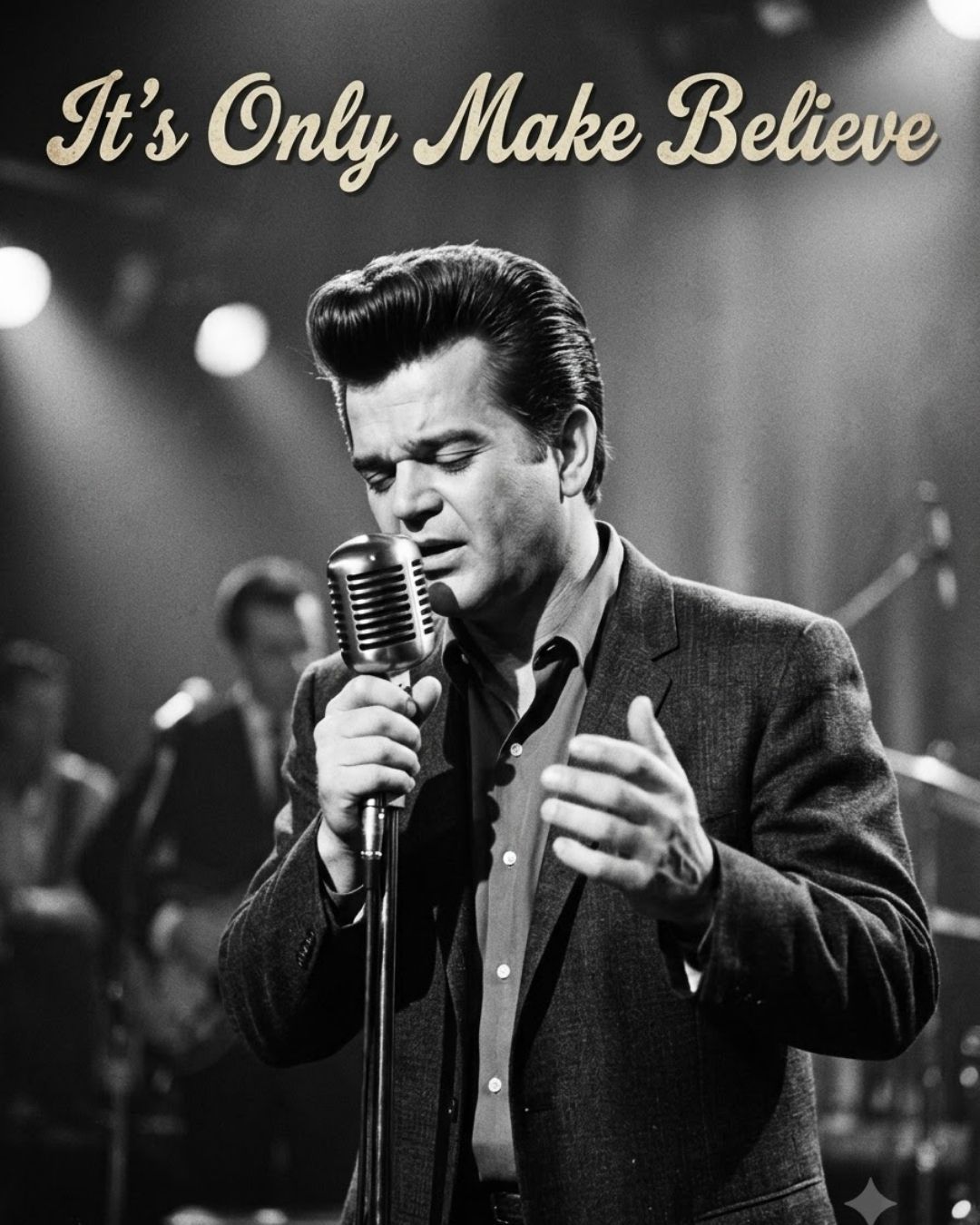
Twitty, born Harold Jenkins, worked on the song with drummer Jack Nance during a Nashville writing session in July 1958. Recorded for MGM Records, it put the young singer’s dramatic vocal approach at the center. The performance builds in intensity, including high falsetto notes, giving the song’s heartbreak a theatrical edge without losing its directness.
That combination helped the single reach listeners beyond a single genre. By November 1958, “It’s Only Make Believe” had reached No. 1 on the U.S. Billboard pop chart. The article reports that it sold more than a million copies, a milestone that brought Twitty far wider attention. Its success showed how a song rooted in country storytelling could also connect with pop audiences, even as musical categories remained distinct.
The recording’s emotional focus would also resonate with the career Twitty later built in country music. Its appeal rested on a familiar tension: the gap between what someone feels and what they can admit, conveyed through a vocal that moves from restraint toward full-throated intensity. Rather than relying on a complicated arrangement, the track lets that rising performance carry much of its weight.
Over the following decades, other artists covered the song, while Twitty’s original remained closely associated with its unusually expressive vocal. Its place in his story links his early pop breakthrough with the country career that followed. More than a chart success, “It’s Only Make Believe” is remembered for bringing a vivid, vulnerable portrayal of longing to listeners across musical boundaries.