“It’s Only Make Believe” began with a short break on a tour stop in Ontario. Conway Twitty and his longtime collaborator Jack Nance sat backstage with an acoustic guitar and, in about ten minutes, sketched out a song about love that exists only in the singer’s imagination.
The pair wanted to bring together the emotional weight of rhythm and blues and the energy of early rock and roll. That combination shaped a ballad whose heartbreak sits alongside a forceful, contemporary sound. Rather than telling a story of a relationship in full, the song centres on the pain of believing in a love that is not truly returned.
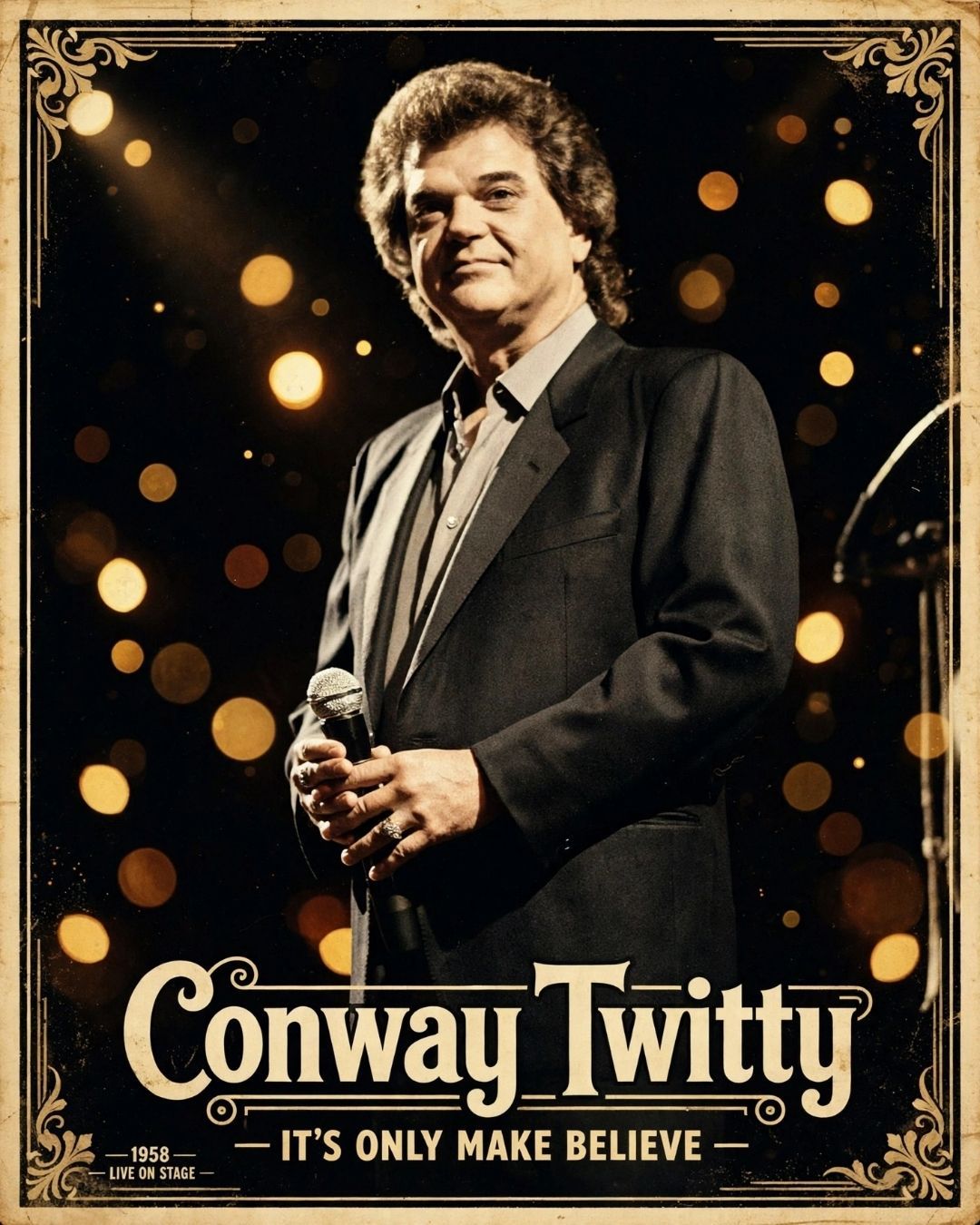
Twitty, born Harold Lloyd Jenkins, carried the song from that dressing-room beginning to an MGM Records studio in Nashville. The account of the recording describes a deliberately spare arrangement, giving his lead vocal room to take focus. Its trembling vibrato became a defining part of the performance, helping convey the gap between what the singer longs for and what is real.
Released in the summer of 1958, “It’s Only Make Believe” climbed the charts and reached No. 1 on the Billboard Hot 100. The success marked a major commercial breakthrough for Twitty and brought the song’s blend of rock-and-roll drive and emotional vulnerability to a broad audience.
The track’s lasting appeal lies in that contrast: its subject is private and painful, while its sound belongs to the fast-changing popular music of the late 1950s. Twitty’s expressive delivery keeps the focus on the song’s central tension, rather than smoothing away its hurt. What began as a brief songwriting session between two collaborators became a defining early recording for Twitty—and a ballad built around the difficult feeling of loving someone who may never love you back.