Dolly Parton’s “Jolene” grew from two encounters: one that stirred a newlywed’s unease and another that gave the song its unforgettable name. Parton later drew on a local bank clerk’s attention to her husband, Carl Dean, to imagine a woman asking a rival not to take the person she loved.
Parton and Dean married in 1966. A tall, red-haired clerk at their Nashville bank began showing Dean attention, and he found reasons to visit the branch. The episode was a small source of tension between the newlyweds, but it gave Parton an emotional starting point for a song about helplessness and jealousy.
The name came from a separate, more innocent moment. At a concert, Parton signed an autograph for a young girl with red hair, fair skin and green eyes. Taken with the child’s name, she repeated “Jolene” aloud so she would remember it. The name and the imagined woman’s appearance became part of the song, while the bank encounter supplied its emotional premise.
From Nashville studio to country hit
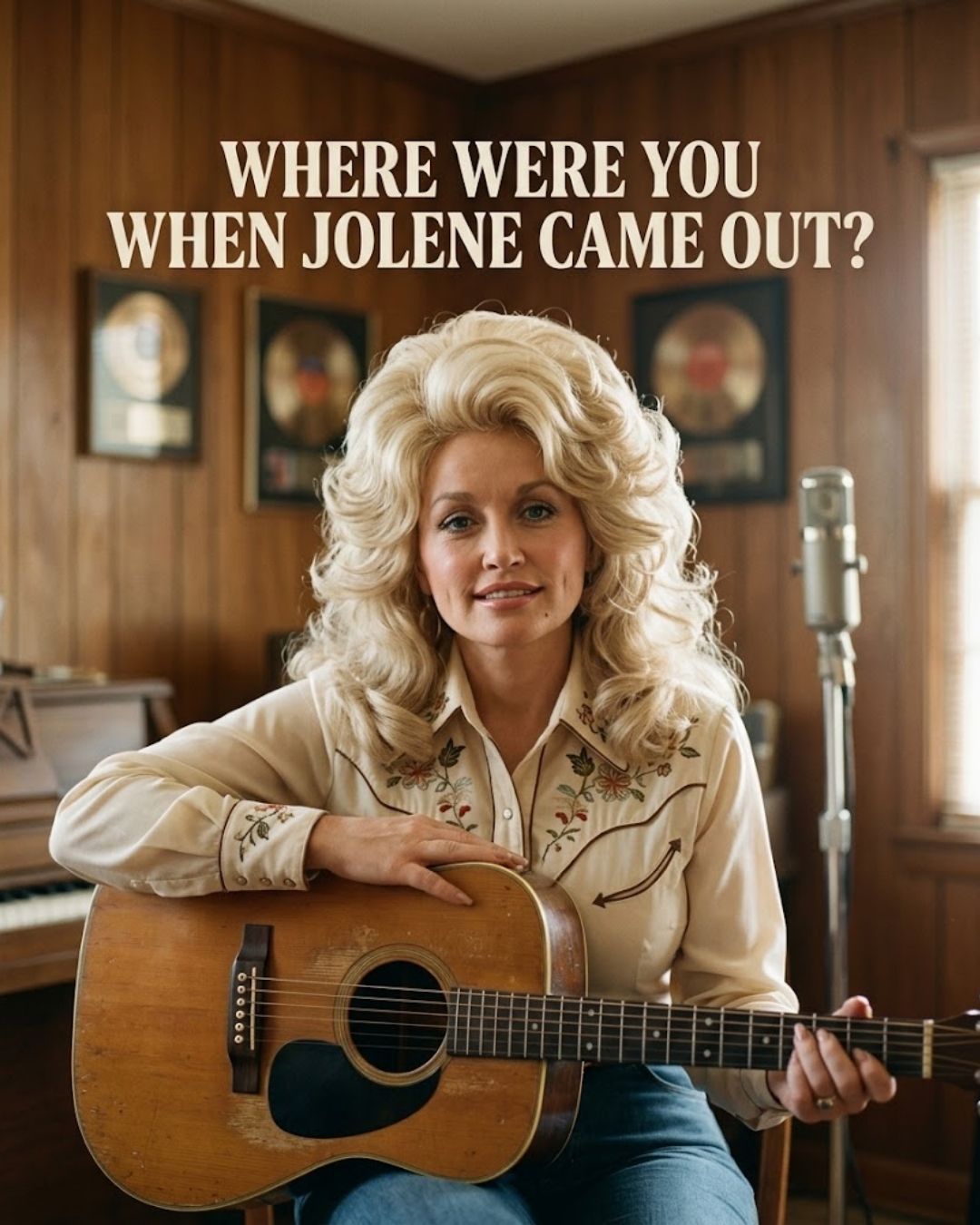
Parton recorded “Jolene” at RCA Studio B in Nashville on May 22, 1973. Produced by Bob Ferguson, the track took a taut, acoustic approach rather than the slow feel of a traditional country heartbreak ballad. Chip Young played the driving, thumb-picked guitar figure, with Wayne Moss adding a steel-string counterpoint. The arrangement gives the narrator’s plea a sense of urgency.
The lyrics also avoid casting Jolene simply as a villain. The narrator admires her beauty even as she asks her not to take her partner. That balance turns a personal fear into a plea marked by vulnerability rather than anger.
RCA Victor issued “Jolene” as a single in October 1973, ahead of the album of the same name, released February 4, 1974. In February, the song reached No. 1 on Billboard’s Hot Country Singles chart. It was Parton’s first appearance on the Billboard Hot 100, where it reached No. 60, and later became her first British hit, peaking at No. 7 in 1976.
“Jolene” received Grammy nominations for Best Female Country Vocal Performance in 1975 and 1976. Parton’s collaboration with Pentatonix won a Grammy in 2017. The song has since been recorded by artists including Olivia Newton-John, the White Stripes, Miley Cyrus and Beyoncé, and Rolling Stone ranked it first on its 2024 list of the 200 greatest country songs of all time.