ABBA’s “SOS” pairs a bright, carefully layered pop arrangement with a lyric about a relationship coming apart. That tension helped make the song a turning point for the group in Britain after their post-“Waterloo” momentum had faltered.
From “Turn Me On” to “SOS”
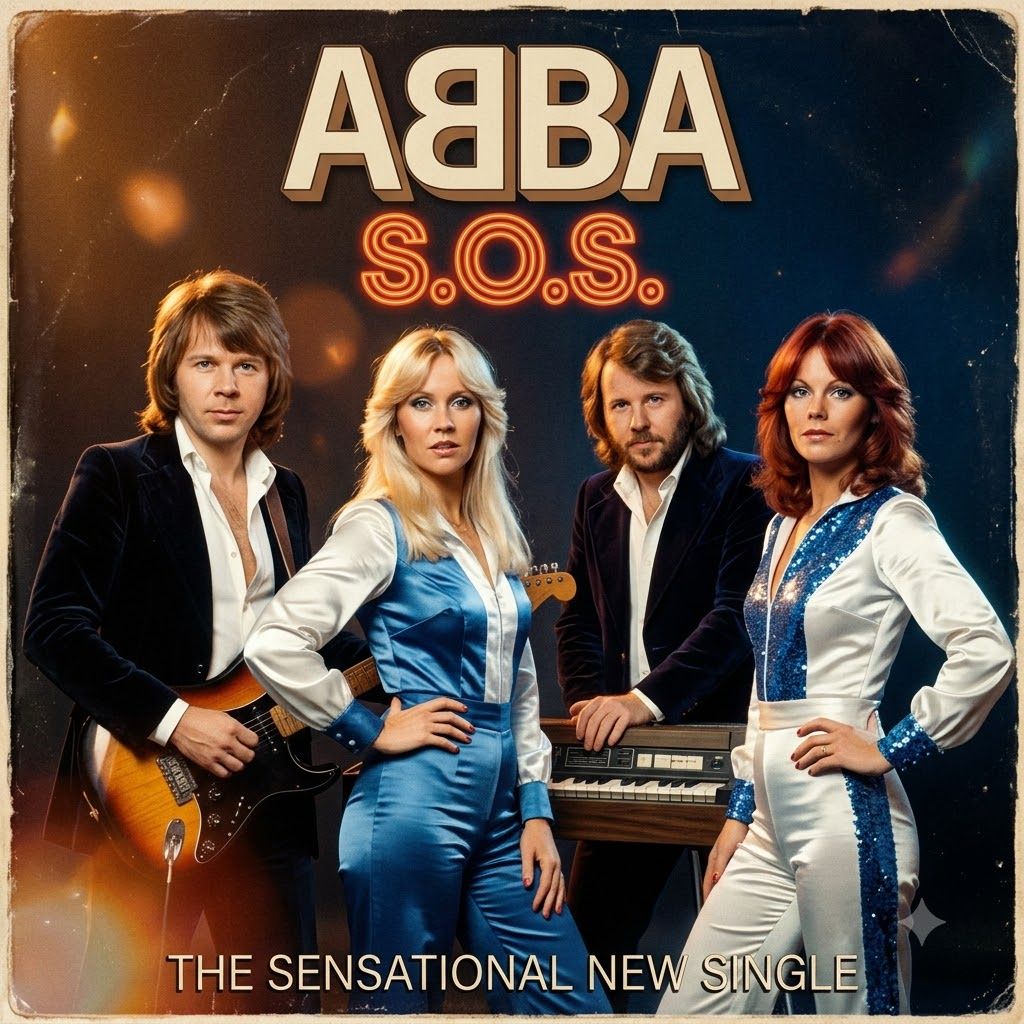
ABBA recorded the backing track at Glenstudio, outside Stockholm, on 22 and 23 August 1974. At the time, the song was called “Turn Me On.” Manager Stig Anderson gave it the title “SOS,” while Björn Ulvaeus almost entirely rewrote his first draft of the English lyrics.
Benny Andersson played keyboards and Ulvaeus guitar, with Janne Schaffer, Mike Watson and Ola Brunkert contributing guitar, bass and drums. Agnetha Fältskog sang the verses. After the initial track and vocal were recorded, Andersson and Ulvaeus added the guitar and synthesizer figures that introduce the song. Sound engineer Michael B. Tretow helped shape its layered production.
The descending chords and shadowy keyboard sound bring unease to an arrangement that otherwise keeps moving with pop brightness. The lyric’s narrator is asking for help as a relationship breaks down. Fältskog’s controlled vocal gives the plea an intimate quality, setting private distress against the song’s polished surface.
Passed over, then released
The song’s route to release was not immediate. After “Waterloo,” ABBA and their record companies selected “So Long” as the next single, in part because it sounded closer to the Eurovision hit. “SOS” was passed over again when “I Do, I Do, I Do, I Do, I Do” became the next single.
“SOS” eventually came out as the third single from the album ABBA, released in Scandinavia in June 1975 and in Britain that September. It reached No. 6 in the UK, the group’s first major British hit since “Waterloo.” The single began a run of 18 consecutive UK Top Ten hits.
Its success also reached far beyond Britain: “SOS” topped the charts in Australia, Belgium, Mexico, New Zealand and South Africa. The song brought together the elements that would define much of ABBA’s pop: intricate keyboards, layered voices and precise craft, with a melody that lifts even as the lyric describes a painful ending. Its return to the British charts marked more than a commercial recovery; it showed how effectively the group could make sadness and exhilaration coexist.