A woman working hard for wages that never seem to be enough stands at the center of ABBA’s “Money, Money, Money.” With Frida’s theatrical delivery and Benny Andersson’s piano-led arrangement, the song makes that frustration sound glittering—but its dreams of escape carry a sharper edge.
The track took shape at Metronome Studio in Stockholm on 17 May 1976. Its early working title was “Gypsy Girl,” and Björn Ulvaeus and Andersson initially explored a violin part with a Romani-style feel. But the melody’s repeated “money, money, money” phrase proved more compelling than the temporary concept. The violin was largely dropped, leaving only a brief bent note before the chorus.
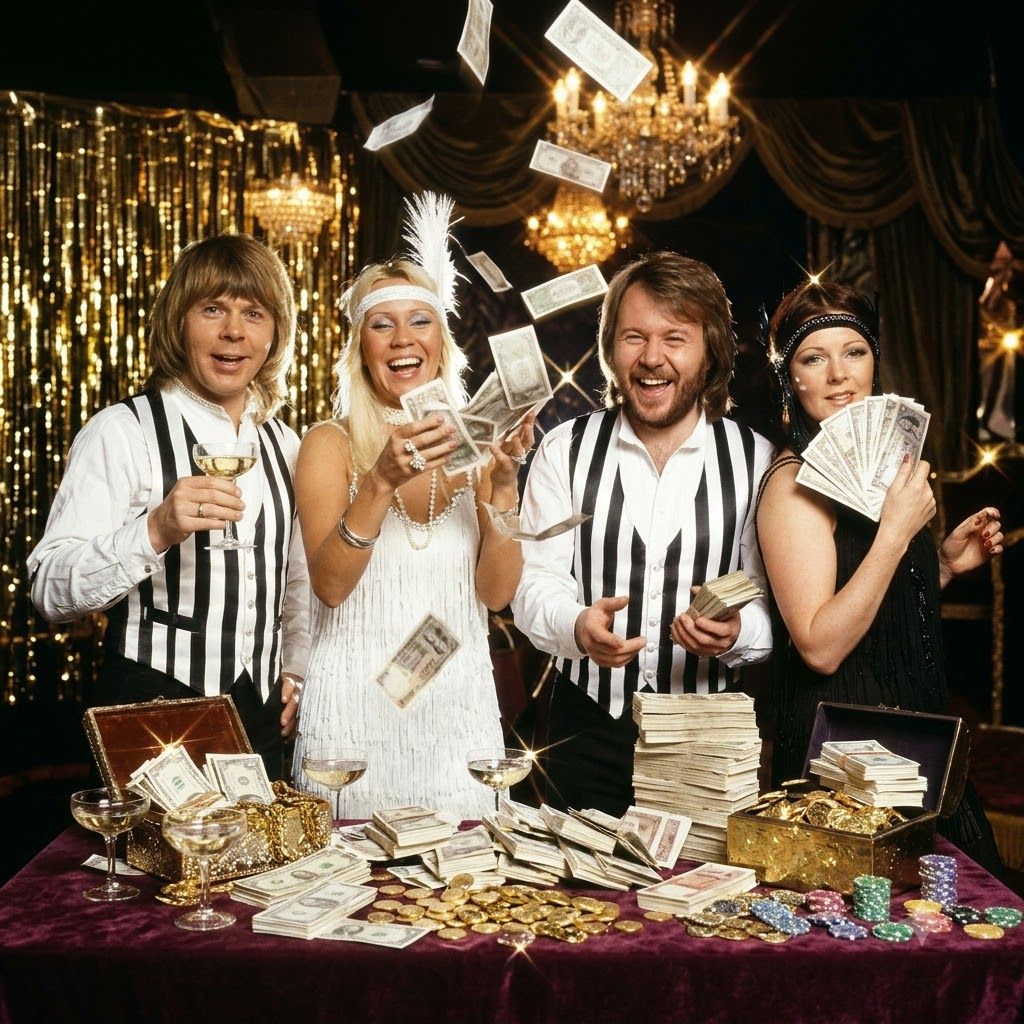
A chorus finds its shape
The recording brought together Andersson on piano, Rutger Gunnarsson on bass and Ola Brunkert on drums, with Anders Glenmark making a one-off guitar contribution. Glenmark later recalled that the musicians spent hours trying to find the right arrangement. Gunnarsson suggested that the bass follow the vocal melody in the choruses, an idea that helped give the hook its distinctive pull.
Frida sings as a hard-working woman who sees little prospect of achieving the life she wants through her wages. She imagines marrying a rich man; if that does not work, she considers Las Vegas or Monaco as other possible routes to fortune. The premise is witty, yet the character’s longing points to the limits of her options. Money is presented as both an alluring fantasy and a way out of everyday financial strain.
The piano introduction gives the song a stage-like quality, while Frida’s performance makes the verses feel like a small dramatic scene. Its cabaret influences add a distinctive colour to the mid-1970s pop arrangement. Andersson later called it his favourite ABBA recording and praised its musical tension.
Released on the album Arrival in October 1976 and as a single the following month, “Money, Money, Money” reached No. 1 in six countries and the Top Three in four others. It peaked at No. 3 in the UK. Lasse Hallström directed the promotional film, shot in central Stockholm and edited in time with the music. The result remains a compact pop drama: polished and playful on the surface, with a character dreaming of a life beyond the one her work can provide.