“That’s What Friends Are For” began as a song for a film. In 1985, Dionne Warwick brought it back with Elton John, Gladys Knight and Stevie Wonder, turning the recording into a benefit for AIDS research and a statement of solidarity.
From film song to benefit recording
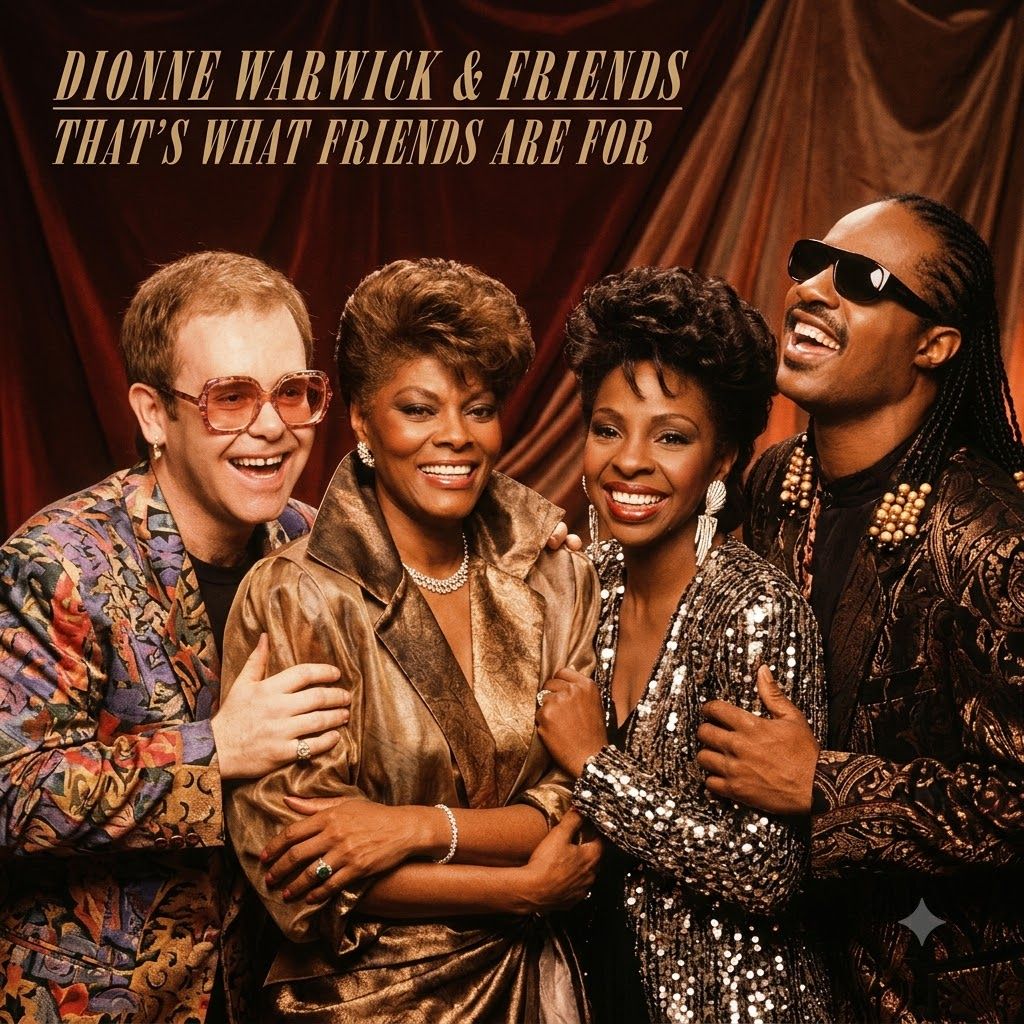
Burt Bacharach and Carole Bayer Sager wrote the song for the 1982 film Night Shift, where Rod Stewart performed it. When Bacharach and Bayer Sager were preparing material with Warwick three years later, Sager recalled the song. Warwick saw potential in a duet with Wonder, and the idea expanded as other collaborators joined.
Actress Elizabeth Taylor was at the studio with writer Neil Simon when Wonder recorded his part. Taylor’s involvement in AIDS research helped prompt Sager to propose donating the recording’s proceeds to the American Foundation for AIDS Research, known as amfAR. Warwick wanted Knight to take part, while Arista Records president Clive Davis suggested John. John flew to Los Angeles to record his contribution.
A shared performance with a purpose
Released in October 1985 under the name “Dionne & Friends,” the recording brought together four distinctive voices. Rather than treating the track as a contest for the spotlight, the arrangement lets Warwick, Wonder, Knight and John reinforce one another. Bacharach’s melody and Bayer Sager’s direct lyrics keep its message clear: friendship means being present when life is difficult.
The charitable purpose gave that message particular weight. At a time when fear and stigma often surrounded AIDS, the recording offered a public expression of compassion while directing funds toward research. It raised more than $3 million for amfAR.
Chart and award success
The single entered the Billboard Hot 100 in November 1985, reached No. 1 on January 18, 1986, and held the position for four weeks. Billboard named it the top single of 1986.
At the 29th Grammy Awards in 1987, the recording won Best Pop Performance by a Duo or Group with Vocal. Bacharach and Bayer Sager also received Song of the Year for the composition.
The song’s lasting association with friendship comes from more than its reassuring lyrics. Its high-profile collaboration and fundraising purpose made the performance an expression of solidarity as well as a pop hit.