Dionne Warwick heard a possibility in “That’s What Friends Are For” when she encountered Rod Stewart’s performance at the end of the 1982 film Night Shift. The song had made little impact as a single, but Warwick’s return to it three years later brought together four major voices—and linked the recording to a cause at a time of widespread stigma around AIDS.
Burt Bacharach and Carole Bayer Sager had written the ballad for the film. When the songwriters were preparing material for Warwick in 1985, Sager suggested revisiting it. Warwick imagined a duet with Stevie Wonder, her recent collaborator on The Woman in Red. The project expanded as Gladys Knight joined at Warwick’s invitation, and Arista executive Clive Davis proposed Elton John for the final chorus. John flew to Los Angeles to record his part.
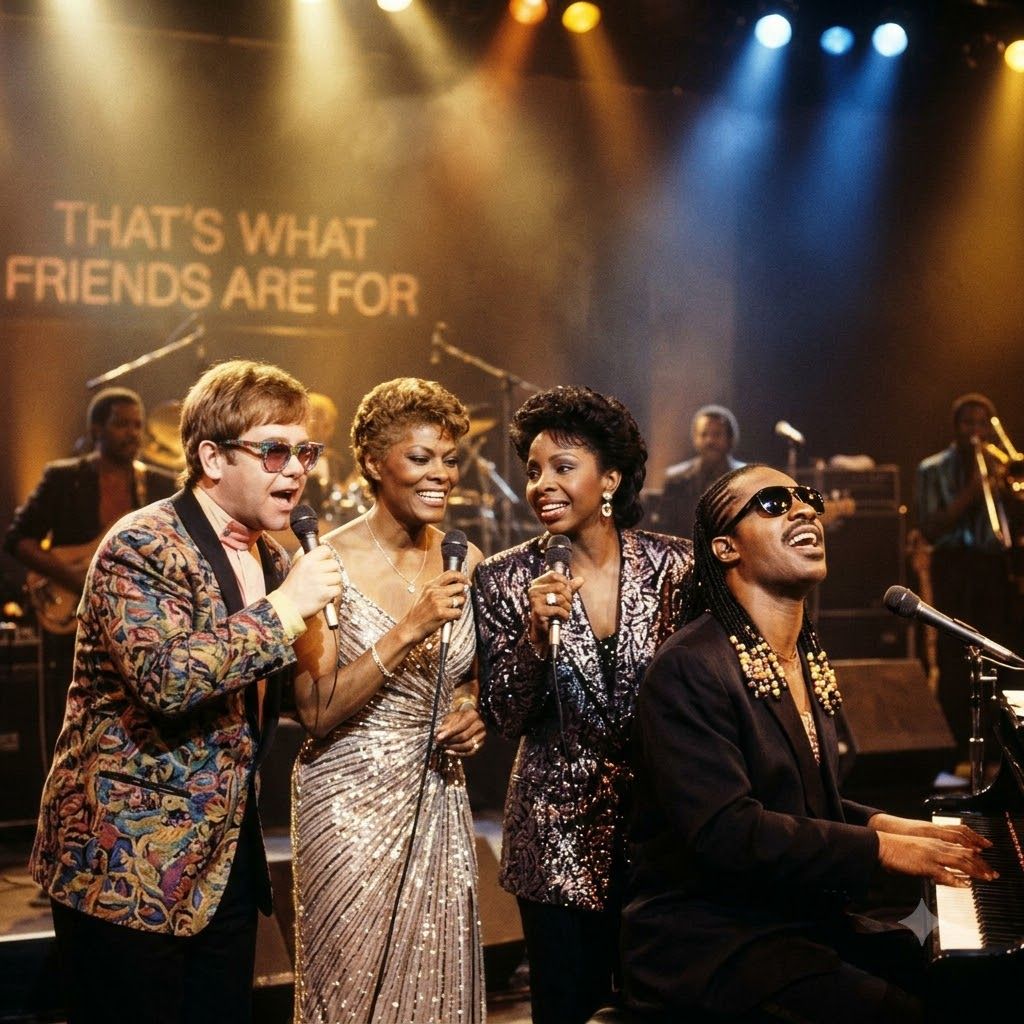
Credited to “Dionne and Friends,” the performance brings together the singers without turning the track into a contest for attention. Warwick anchors the group, while John’s piano and Wonder’s harmonica add to Bacharach’s melodic arrangement. The direct lyric leaves space for each voice and reinforces the song’s theme of friendship.
A song with a purpose
A pivotal moment came during Wonder’s vocal session, which actress and AIDS activist Elizabeth Taylor attended. Her commitment to the cause helped inspire Sager to suggest donating the recording’s proceeds to the American Foundation for AIDS Research, or amfAR. The artists, songwriters and Arista Records agreed to give their proceeds.
As AIDS was devastating communities and misinformation and stigma persisted, the song’s language of support took on a more specific meaning. It became a public expression of solidarity as well as a pop recording, with the project raising funds and drawing attention to people living with HIV and AIDS.
Released in October 1985, the single entered the Billboard Hot 100 the following month and reached No. 1 in January 1986, staying there for four weeks. It also topped the R&B and Adult Contemporary charts. At the 1987 Grammy Awards, the recording won Best Pop Performance by a Duo or Group with Vocal; Bacharach and Bayer Sager received Song of the Year as its writers.
The record’s lasting significance lies in the meeting of an accessible song, a distinctive ensemble and a concrete charitable purpose. Warwick’s revival gave a little-noticed soundtrack composition a new life—and made its message of friendship resonate beyond the charts.