Conway Twitty’s “It’s Only Make Believe” was not initially billed as the main attraction. When MGM released the single on July 14, 1958, the song was on the B-side of “I’ll Try.” But its portrayal of unreturned love, delivered with a young rock-and-roll singer’s dramatic intensity, would carry it far beyond its modest billing.
Twitty, born Harold Lloyd Jenkins, had adopted his stage name in 1957 and was working to establish himself in the first wave of rock and roll. He co-wrote “It’s Only Make Believe” with drummer Jack Nance while they were performing in Hamilton, Ontario. Its central idea is direct: the narrator longs for someone who does not love him back, and the romance he imagines is not real.
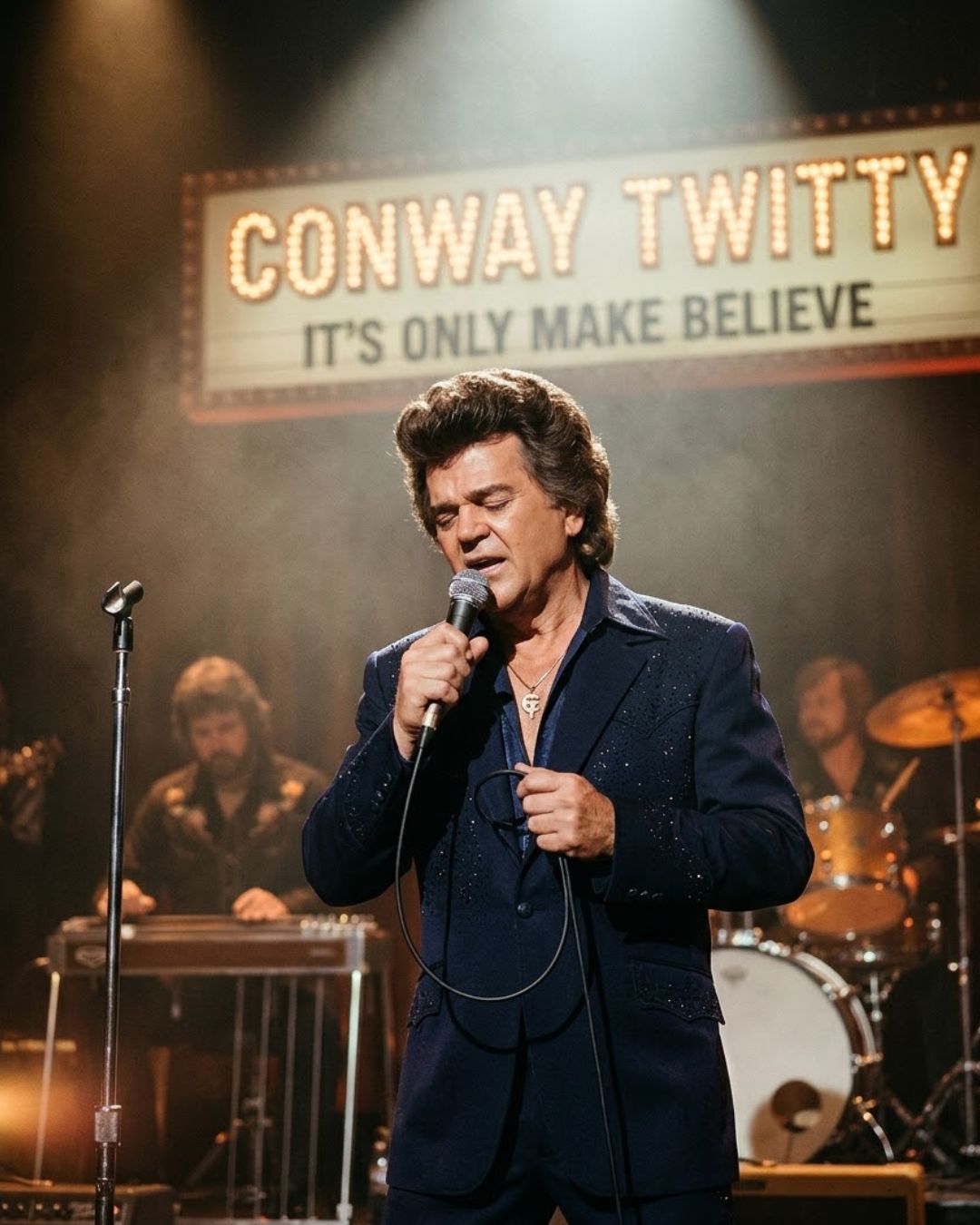
That tension gives the song its emotional force. Twitty’s resonant baritone makes the fantasy sound both sweeping and vulnerable. The lyric tries to frame the love as make-believe, but the performance conveys a longing the singer cannot simply dismiss. The result brings pop melodrama together with the pulse of early rock and roll, turning an unreturned romance into a compact, high-stakes confession.
From the reverse side to the charts
Radio attention shifted focus to the B-side, and MGM gave greater emphasis to the song listeners were responding to. “It’s Only Make Believe” reached No. 1 on the Billboard Hot 100 for two weeks. It also spent five weeks at the top of the UK singles chart, including Christmas week. The Official Charts Company records that the single charted in more than 22 countries and sold eight million copies worldwide.
The success arrived before Twitty’s later, decisive turn toward country music, where he would build a substantial career with many chart-topping hits. The record captures him at an earlier crossroads: a young performer drawing on rock-and-roll urgency and romantic yearning to connect with listeners beyond a single genre.
Its lasting appeal rests on the contradiction at the heart of the performance. The narrator calls the romance unreal, while Twitty’s voice makes the feeling unmistakably convincing. That gap between the story’s protective fiction and its genuine ache helps the song remain more than a relic of its era.