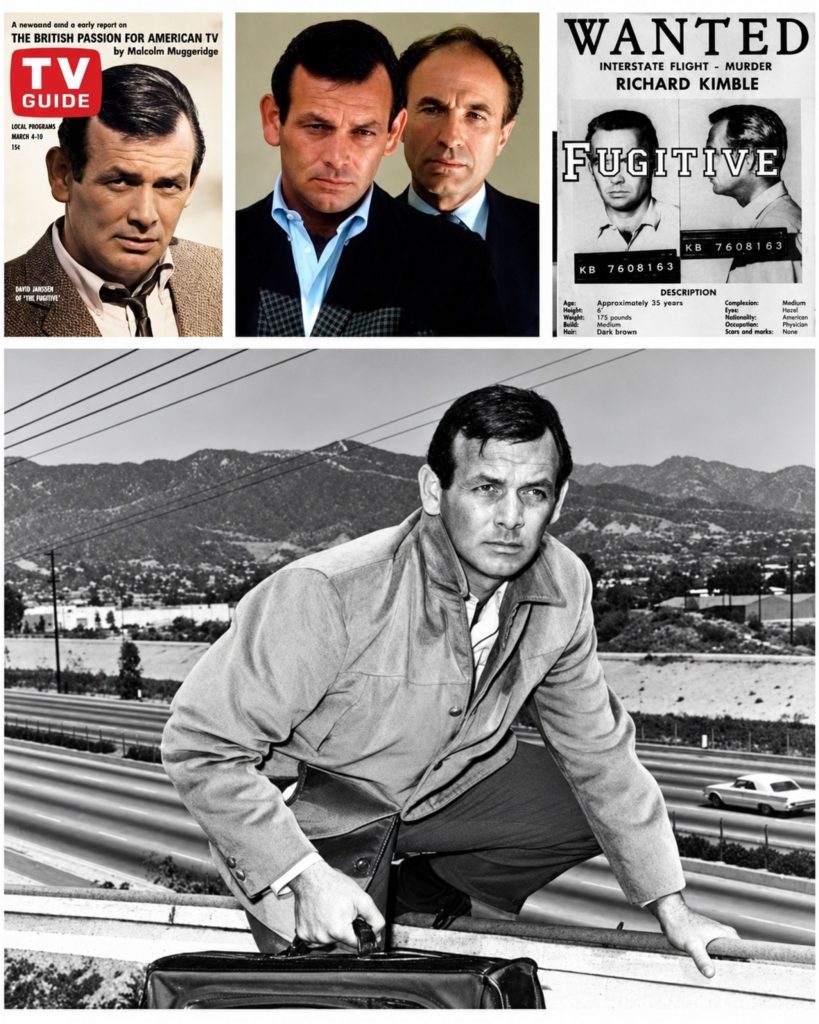
When David Janssen decided not to return as Richard Kimble for a fifth season of The Fugitive, ABC faced a choice: end the series with its regular episodes or give viewers an answer to the question that had driven four years of television.
The network initially planned to let the story stop without resolving Kimble’s case. Leonard Goldberg, an ABC programming executive, pushed for a different ending, arguing that viewers had invested in the search and deserved to know where it led.
A story built around escape
The Fugitive premiered in September 1963 with Kimble convicted of murdering his wife. He maintained that a one-armed man had committed the crime, but was sentenced to death. After a train wreck allowed him to escape while being transported to his execution, Kimble travelled under assumed names, searching for the man and avoiding Lieutenant Philip Gerard, who remained determined to bring him back.
The weekly episodes usually followed Kimble into a new town, where he helped people facing their own problems before moving on as Gerard closed in. That format made the show easy to watch in different orders, a benefit for reruns. But it also left the central question unanswered. Some network executives worried that resolving the case might weaken the episodes’ appeal in syndication.
Janssen’s decision meant the series would end in 1967, but the last regular episode had been made with another season in mind. Goldberg heard acquaintances asking whether Kimble would ever be cleared. He argued to ABC’s senior officials that a network that valued viewers’ loyalty should take their attachment to the story seriously. The network ultimately approved a two-part finale, “The Judgment.”
The final pursuit
In the conclusion, Gerard captures Kimble but gives him time to follow new evidence. Their pursuit leads to an abandoned amusement park, where the One-Armed Man tries to kill Kimble. Gerard shoots him, and a surviving witness provides testimony that clears Kimble of the murder.
The two parts aired on August 22 and 29, 1967. More than 78 million people watched the concluding hour, which drew a 45.9 rating and a 72 share—the largest audience for a series episode at the time.
The last scene gave the long chase a quieter finish. Outside the courthouse, Gerard offers Kimble his hand. Kimble then leaves with Jean Carlisle without looking back for the pursuer who had shaped his life on the run.
The finale demonstrated that a definitive ending could draw a vast audience rather than diminish the show’s value. It also helped establish the idea that television series built around an ongoing mystery could—and perhaps should—bring their stories to a close.