Agnetha Fältskog launched her first English-language solo album in May 1983 with a song that had already spent several years in another singer’s hands. “The Heat Is On,” the lead single from Wrap Your Arms Around Me, had been written by Florrie Palmer and Tony Ashton and recorded by Noosha Fox in 1979. Fältskog did not write it, but her version became a defining moment in her move beyond ABBA.
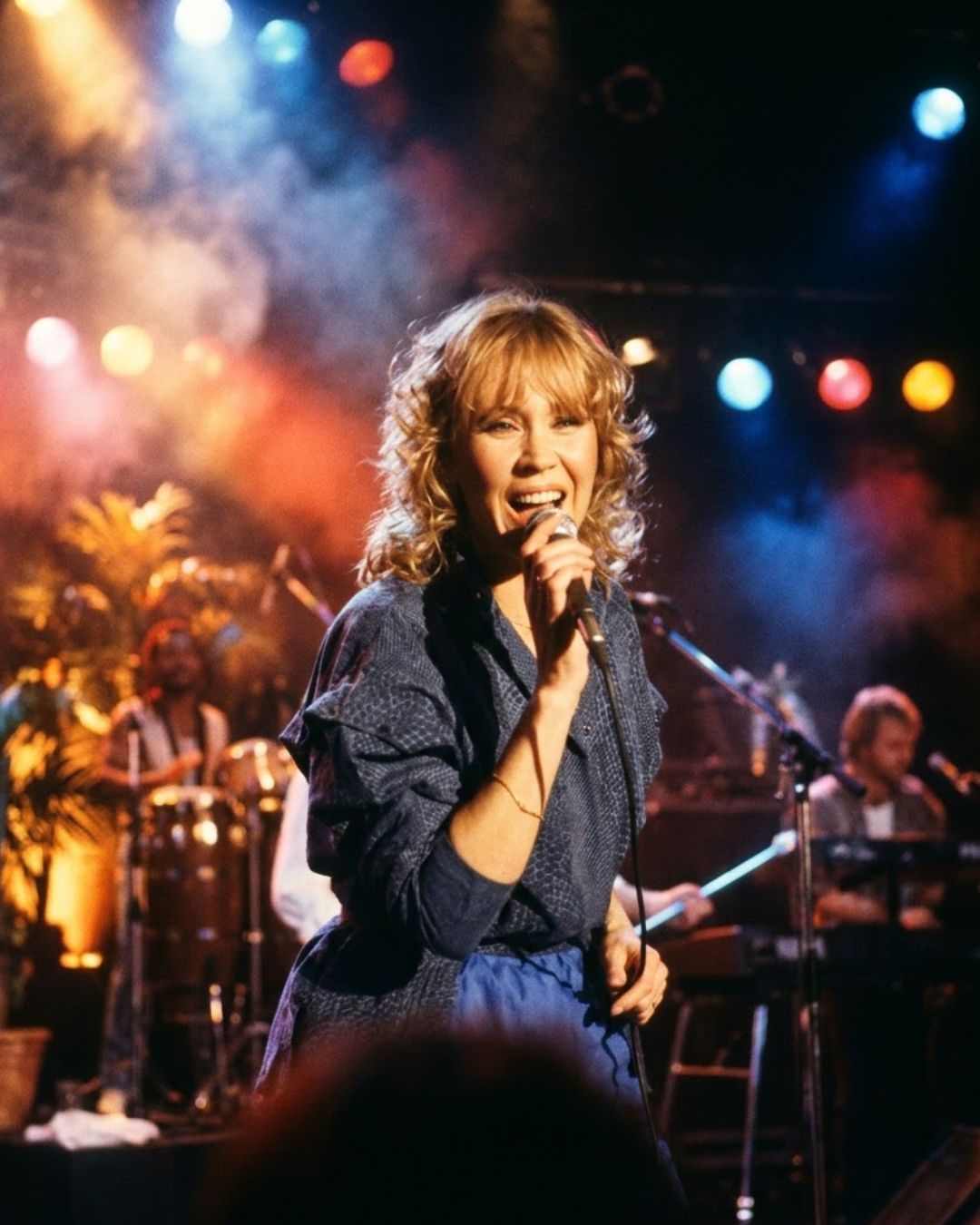
Produced by Mike Chapman, the track presented Fältskog in a bright, buoyant pop setting distinct from the group’s familiar sound. Her clear vocal sits at the center of a lively arrangement, colored by tropical rhythms and polished early-1980s production. Rather than leaning on the intimacy of a ballad, the song builds its appeal around movement and an easy, sunlit atmosphere.
That fresh framing helped the single find a broad audience, though its performance varied by market. It reached No. 1 in Sweden and Norway, and No. 2 in Belgium and the Dutch Top 40. In the United Kingdom, it peaked at No. 35. While it did not reach the British Top 10, it remained Fältskog’s highest-charting solo single there until “If I Thought You’d Ever Change Your Mind” reached No. 11 in 2004.
The song’s visual presentation added another dimension. Directed by Erik Irion Nanne, the music video was filmed at Stockholm’s Centralbadet public bath and features dancer Blossom Tainton. Its setting gives the track’s warm-weather mood a tangible backdrop, making the clip more than a straightforward performance video.
The single was a cover, not an autobiographical statement, but it took on significance as Fältskog established herself outside ABBA. Chapman’s production and the song’s rhythmic lift gave her a distinct solo vehicle, while its chart success was strongest in Scandinavia and continental Europe. “The Heat Is On” brought together a pre-existing composition, a new vocal interpretation and a sound tailored to its moment—an early-1980s pop record that helped define the opening of Fältskog’s solo chapter.