Michael Bolton’s “Time, Love and Tenderness” offers comfort without pretending that hurt disappears overnight. The title track of his 1991 album frames healing as a gradual process, with patience and care helping someone move forward rather than erase what happened.
Written by Diane Warren, the song builds its message around three plainspoken ideas: time, love and tenderness. Its reassurance is direct, but not a promise of an instant cure. Bolton sings to a wounded listener with warmth and conviction, giving the lyrics the feeling of an offer of support rather than a detached account of heartbreak.
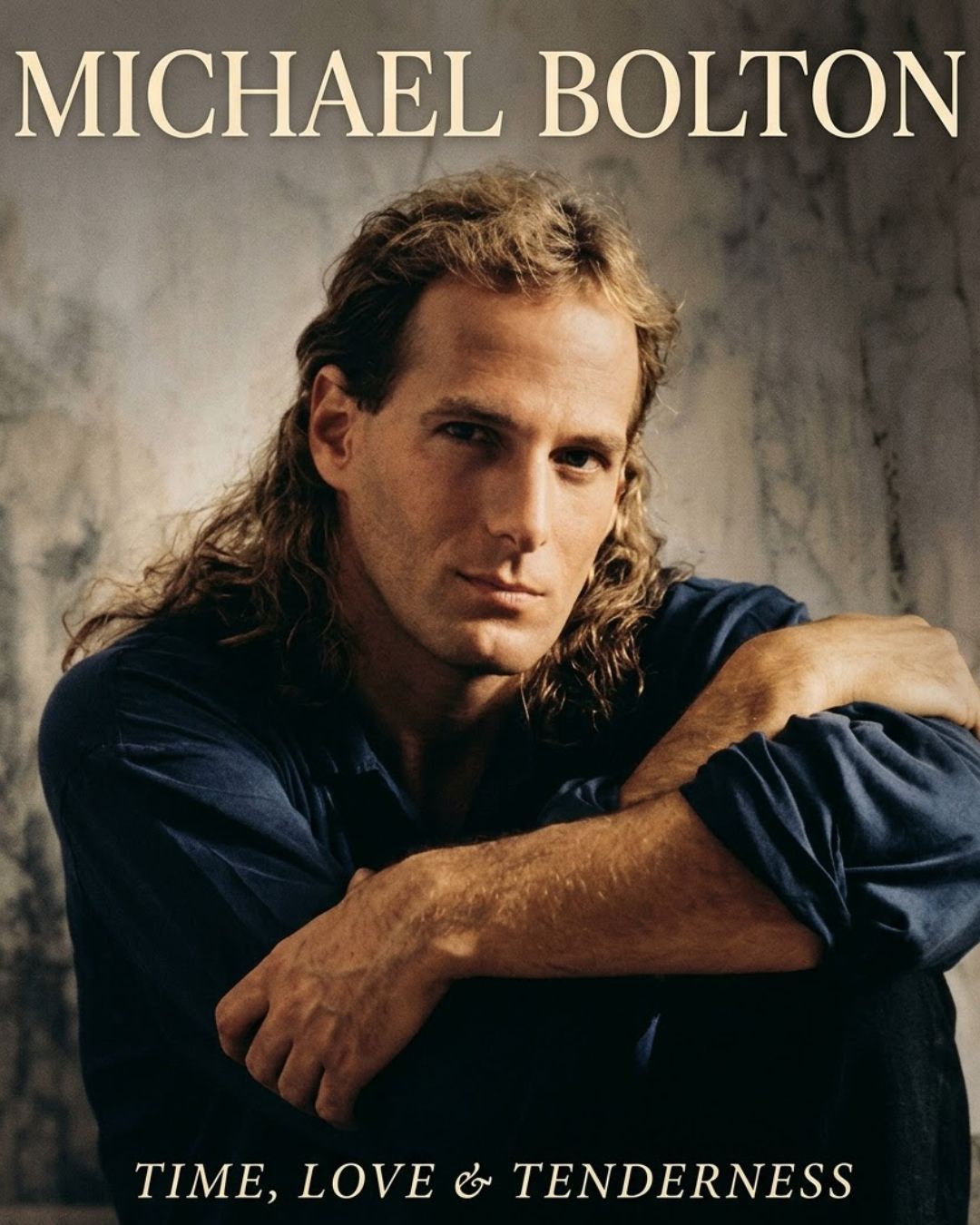
That balance between strength and gentleness also shapes the arrangement. Bolton’s powerful lead vocal sits over keyboards, synthesizers, synthesized bass, drums and percussion from Walter Afanasieff. Michael Landau’s electric guitar, Gigi Gonaway’s timbales and layered backing vocals add movement. The production grows in intensity while keeping an unhurried pulse, allowing the vocal’s scale to serve the song’s message of comfort.
A hit built on a human promise
Released as a single in 1991, “Time, Love and Tenderness” reached No. 7 on the Billboard Hot 100 and No. 1 on Billboard’s Hot Adult Contemporary chart. The album of the same name arrived on April 23, 1991, following the commercial success of Bolton’s “Soul Provider” and continuing his move toward adult-oriented pop and blue-eyed soul.
The album also included Bolton’s version of Percy Sledge’s “When a Man Loves a Woman.” Where that song carries the history of a familiar standard, the title track presents a contemporary expression of romantic reassurance, centered on Warren’s original writing.
The song’s appeal lies in the tension between its polished, full-bodied sound and its modest emotional proposition. It does not say that pain vanishes; it suggests that care, practiced over time, can help change its hold on someone. The title’s three words describe not a quick fix, but the conditions that make healing possible.
Bolton brings the vocal force, Warren supplies the clear central idea, and Afanasieff’s production gives the emotion room to rise without losing focus. Together, they make a chart hit whose reassurance is less about surrendering to hurt than finding a way beyond it.